
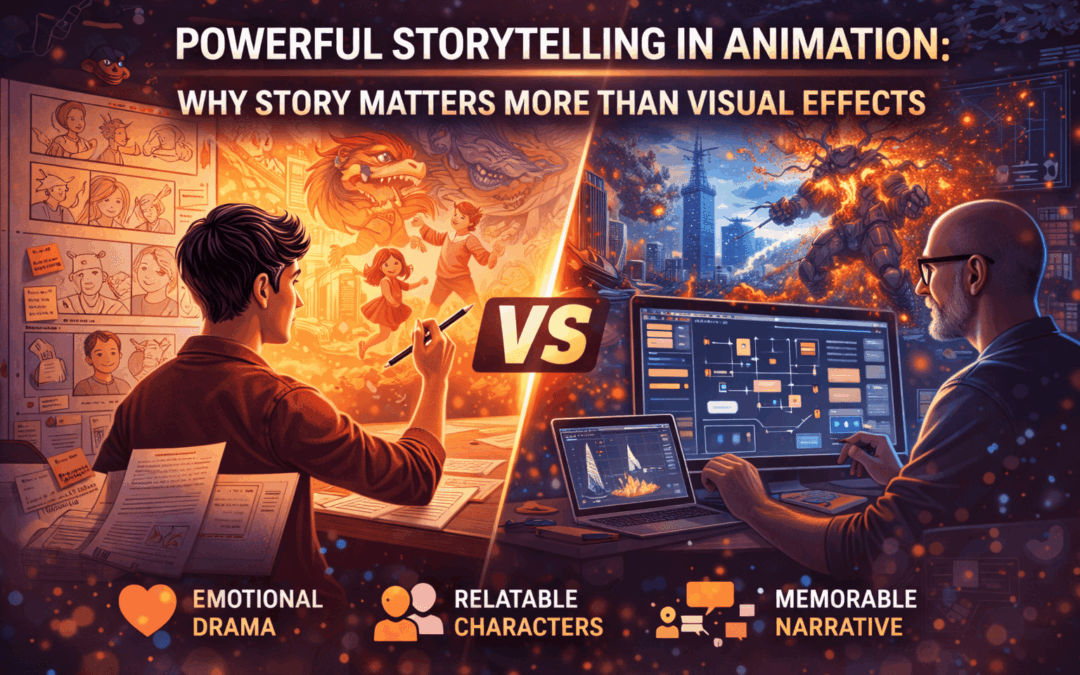
How Storytelling Drives Animation More Than Visual Effects
When people think of animation, they often imagine stunning visuals, complex effects, and cutting-edge software. While these elements matter, they are not what truly connects an audience to an animated film, series, or advertisement. At its core, animation succeeds because of story. In fact, storytelling in animation plays a far greater role than visual effects in creating memorable and impactful experiences.
No matter how advanced the tools become, audiences respond first to emotions, characters, and meaning. Visual effects enhance animation, but storytelling gives it purpose. This is why the strongest animated projects remain timeless even when technology evolves.
Why Animation Exists Beyond Visual Spectacle
Animation was never meant to be just a technical showcase. From early hand-drawn films to modern CGI, animation has always been a medium for storytelling. The reason classics remain relevant is not their effects, but the stories they tell.
Professionals understand that storytelling in animation defines:
- Emotional engagement
- Character relatability
- Narrative clarity
- Audience retention
Without a compelling story, even the most visually impressive animation feels empty.
Story Comes Before Style in Professional Animation
In professional studios, story decisions are made long before visual styles are finalized. This is a fundamental truth behind storytelling in animation.
Before production begins, teams focus on:
- Story structure
- Character arcs
- Emotional beats
- Narrative pacing
Only after these elements are clear do visual designers and animators step in. This ensures that every visual choice supports the story rather than distracting from it.
How Storytelling in Animation Shapes Character Design
Characters are the emotional anchors of animation. Strong characters are not defined by how detailed they look, but by how well they are written and animated.
Effective storytelling in animation ensures that:
- Character designs reflect personality
- Movements communicate emotion
- Expressions support narrative intent
Audiences connect with characters who feel real, not necessarily realistic. This connection is built through storytelling, not effects.
Visual Effects Support the Story—They Don’t Lead It
Visual effects are tools, not the message. When effects dominate storytelling, the narrative often suffers. This is why experienced studios treat effects as supporting elements.
In strong storytelling in animation, effects are used to:
- Enhance mood
- Highlight key moments
- Strengthen emotional impact
Effects that exist without narrative purpose rarely leave a lasting impression.
Why Emotional Impact Matters More Than Visual Complexity
Audiences remember how a story made them feel, not how complex the visuals were. Emotional moments stay with viewers long after the animation ends.
This is where storytelling in animation proves its power. Through pacing, silence, timing, and performance, animators can evoke emotions that visuals alone cannot achieve.
A simple scene with strong emotional storytelling often outperforms a visually dense but emotionally hollow sequence.
The Role of Timing and Pacing in Storytelling
Timing is one of the most underrated storytelling tools in animation. How long a moment lasts, when a character reacts, and how scenes transition all affect storytelling.
Strong storytelling in animation relies on:
- Proper scene timing
- Controlled pacing
- Intentional pauses
These elements guide the audience’s emotional journey more effectively than visual effects ever could.
Storyboards: Where Storytelling Truly Begins
Storyboards are the blueprint of animated storytelling. They translate scripts into visual narratives and reveal story flaws early.
In studios, storyboarding is a critical step in storytelling in animation because it:
- Tests narrative clarity
- Defines shot composition
- Establishes emotional flow
If the story doesn’t work at the storyboard stage, no amount of visual effects can fix it later.
Why Simple Stories Often Create the Strongest Animation
Some of the most successful animated projects use simple storylines. Their power lies in execution, not complexity.
This highlights an important lesson in storytelling in animation:
- Clear stories resonate better
- Simple narratives allow deeper emotional focus
- Audiences connect faster
Complex visuals cannot compensate for unclear storytelling.
Storytelling Guides Animation Performance
Animation is performance-based. Every movement, expression, and gesture is a storytelling decision.
Through effective storytelling in animation, animators ensure that:
- Actions reflect inner emotions
- Body language supports dialogue
- Movement feels motivated
This performance-driven approach creates believable and engaging animation, even with minimal effects.
Why Studios Prioritize Story in Production Pipelines
In professional pipelines, story reviews happen continuously. Studios constantly evaluate whether visuals are serving the narrative.
This reinforces the importance of storytelling in animation across production stages:
- Pre-production focuses on story structure
- Production ensures story consistency
- Post-production refines emotional impact
Story remains the guiding force throughout the pipeline.
Visual Effects Without Story Feel Disposable
Animation overloaded with effects often feels impressive for a moment, then forgotten. Without story, visuals lack meaning.
Strong storytelling in animation ensures longevity. Stories stay relevant even when technology becomes outdated. This is why older animated films continue to resonate with new generations.
What Aspiring Animators Must Understand
For beginners, focusing only on software and effects is a common mistake. Learning storytelling fundamentals is what truly elevates animation skills.
Understanding storytelling in animation helps animators:
- Make better creative decisions
- Communicate ideas clearly
- Create emotionally engaging work
Studios value animators who can tell stories, not just execute effects.
The Future of Animation Is Story-Driven
As tools become more accessible and effects more advanced, storytelling becomes the true differentiator. Anyone can learn software, but not everyone can tell a compelling story.
The future of animation belongs to creators who master storytelling in animation and use technology to enhance—not replace—it.
Final Thoughts
Visual effects may attract attention, but storytelling holds it. The most successful animated projects are remembered not for how they looked, but for how they made audiences feel.
Storytelling in animation is what gives visuals meaning, characters depth, and moments emotional power. Effects evolve, tools change, but strong storytelling remains timeless.
For anyone serious about animation, mastering storytelling is not optional—it is essential.
Recent Comments