
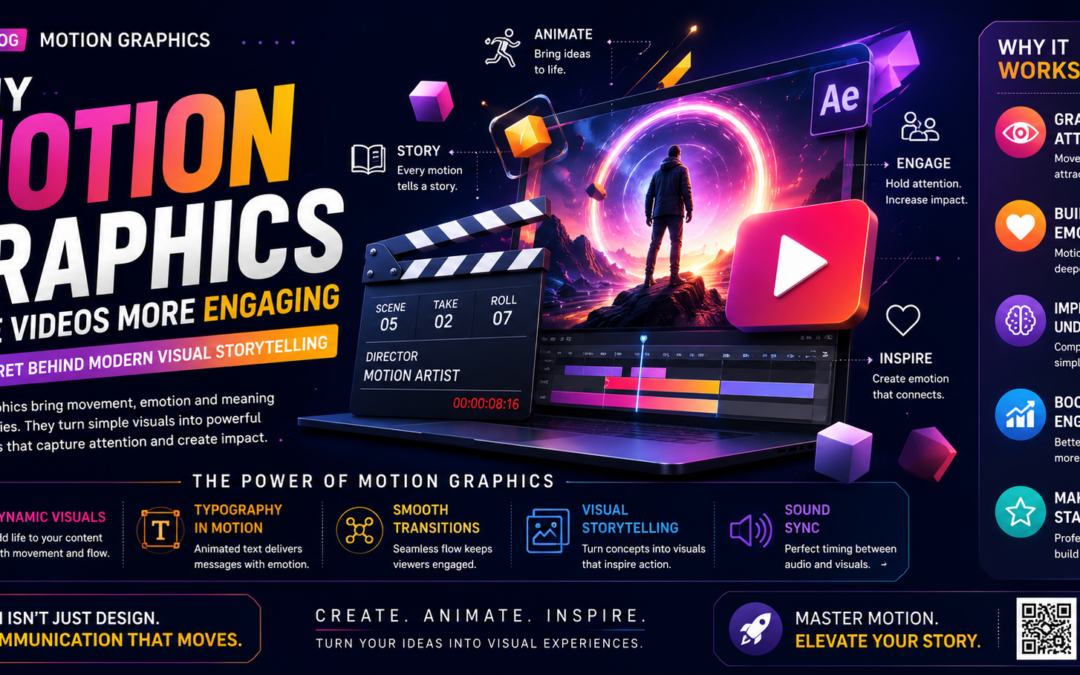
Why Motion Graphics Make Videos More Engaging: The Secret Behind Modern Visual Storytelling
Introduction
Modern digital content is evolving faster than ever. Every day, people watch countless advertisements, reels, YouTube videos, movie trailers, brand campaigns, and social media content. In this highly competitive digital world, grabbing audience attention has become extremely difficult. This is where Motion Graphics in Visual Storytelling plays a powerful role.
Motion graphics combine animation, typography, transitions, design, and movement to make content visually engaging and emotionally impactful. From cinematic title sequences and product advertisements to YouTube intros and social media reels, motion graphics have become one of the most important tools in modern media.
Today, viewers expect fast, visually exciting, and professional-looking content. Static visuals alone often fail to keep users engaged for long periods. Motion graphics help videos feel more dynamic, modern, and immersive.
In this blog, we will explore why motion graphics make videos more engaging and understand the secret behind modern visual storytelling.
What Are Motion Graphics?
Motion graphics are animated graphic elements used to communicate ideas visually.
They combine:
- graphic design
- animation
- typography
- visual effects
- transitions
- sound synchronization
Motion graphics are commonly used in:
- advertisements
- films
- YouTube videos
- OTT intros
- explainer videos
- social media campaigns
The goal of Motion Graphics in Visual Storytelling is to improve communication while making visuals more attractive and engaging.
Why Motion Graphics Grab Attention Faster
Human eyes naturally respond to movement.
Animated visuals instantly attract attention because motion creates visual stimulation.
This is why platforms like Instagram, YouTube, and OTT services heavily use animated visuals.
Motion graphics help:
- stop users from scrolling
- improve watch time
- create excitement
- increase engagement
The ability to quickly capture attention is one of the biggest strengths of Motion Graphics in Visual Storytelling.
How Motion Graphics Improve Storytelling
Storytelling becomes more effective when visuals support the narrative.
Motion graphics help creators explain ideas through:
- animated text
- visual transitions
- scene movement
- dynamic compositions
Instead of simply showing information, motion graphics make audiences experience the story visually.
This emotional engagement is what makes Motion Graphics in Visual Storytelling so powerful.
Why Static Content Often Feels Less Engaging
Static visuals can communicate information, but they often lack energy.
Modern audiences consume content quickly and expect visual stimulation.
Motion graphics solve this problem by adding:
- movement
- rhythm
- cinematic flow
- visual excitement
This creates a more immersive experience for viewers.
That is why Motion Graphics in Visual Storytelling has become essential in digital media.
Motion Graphics in Advertisements
Brands use motion graphics heavily in advertising campaigns.
Motion graphics help advertisements:
- look modern
- explain products clearly
- create emotional connection
- improve brand identity
Luxury product ads, technology commercials, and cinematic brand videos often rely on advanced motion graphics.
This makes Motion Graphics in Visual Storytelling highly important in modern marketing.
Role of Typography Animation
Animated typography is one of the strongest elements in motion graphics.
Moving text creates emphasis and emotional impact.
Typography animation is widely used in:
- trailers
- YouTube intros
- social media videos
- promotional campaigns
Professional typography animation improves storytelling and visual flow.
Typography is a major part of Motion Graphics in Visual Storytelling because text itself becomes a visual experience.
Why Transitions Matter
Smooth transitions make videos feel professional and cinematic.
Transitions connect scenes naturally and maintain visual flow.
Poor transitions can make videos feel disconnected and confusing.
Professional creators use:
- camera movements
- shape transitions
- motion blur
- seamless cuts
Strong transitions improve the overall quality of Motion Graphics in Visual Storytelling.
Color Psychology in Motion Graphics
Colors influence emotions even more when combined with movement.
Different color palettes create different feelings:
- blue feels trustworthy
- red feels energetic
- black feels cinematic
- bright colors feel playful
Motion designers carefully choose colors to support storytelling goals.
Color psychology is an important part of Motion Graphics in Visual Storytelling because visuals directly affect viewer emotions.
Motion Graphics in Films and OTT Content
Modern films and streaming platforms use motion graphics extensively.
They appear in:
- title sequences
- cinematic intros
- visual effects
- information displays
- promotional content
Motion graphics help films feel visually polished and modern.
This makes Motion Graphics in Visual Storytelling highly valuable in entertainment industries.
Why Social Media Depends on Motion Graphics
Social media content is highly competitive.
People scroll rapidly, so creators only have a few seconds to capture attention.
Motion graphics help increase:
- engagement
- retention
- shares
- watch time
Animated visuals perform better because they create instant visual interest.
That is why Motion Graphics in Visual Storytelling is widely used in reels, shorts, and digital campaigns.
Emotional Impact of Motion Design
Motion graphics influence emotions through:
- pacing
- animation timing
- music synchronization
- visual intensity
Fast movement creates excitement, while smooth movement creates elegance.
Professional motion designers carefully control these elements to influence audience emotions.
This emotional connection is one of the biggest reasons Motion Graphics in Visual Storytelling works so effectively.
Motion Graphics in Broadcast Design
Broadcast channels use motion graphics for:
- news intros
- sports graphics
- live scoreboards
- transitions
- lower thirds
These visuals improve information clarity and audience engagement.
Broadcast media heavily depends on Motion Graphics in Visual Storytelling to maintain professional presentation.
Tools Used for Motion Graphics
Professional motion designers use tools like:
- Adobe After Effects
- Cinema 4D
- Blender
- Adobe Premiere Pro
These tools help artists create cinematic and visually dynamic content.
However, creativity and storytelling remain more important than software alone.
Common Mistakes Beginners Make
Many beginners struggle because of:
- excessive effects
- poor timing
- weak typography
- cluttered visuals
- inconsistent animation
Good motion graphics require balance and clarity.
Understanding visual communication is essential for improving Motion Graphics in Visual Storytelling.
Skills Needed to Improve in Motion Graphics
To create professional work, artists should focus on:
- animation principles
- timing and spacing
- storytelling
- composition
- typography
- color balance
Technical knowledge alone is not enough.
The real strength of Motion Graphics in Visual Storytelling comes from combining creativity with communication.
Future of Motion Graphics
The future of motion graphics includes:
- AI-powered animation
- real-time rendering
- immersive experiences
- interactive visual content
- virtual production
As digital media continues growing, motion graphics will become even more important in communication and entertainment.
Career Opportunities in Motion Graphics
Motion graphics skills are valuable in:
- advertising agencies
- film production
- OTT platforms
- social media marketing
- broadcast media
- content creation industries
Professionals skilled in Motion Graphics in Visual Storytelling are highly demanded in modern creative industries.
Final Thoughts
Motion graphics have transformed how modern content communicates with audiences.
From advertisements and films to YouTube videos and social media campaigns, motion graphics help content feel more engaging, cinematic, and emotionally impactful.
The power of Motion Graphics in Visual Storytelling lies in its ability to combine movement, design, typography, and emotion into a single visual experience.
For students and aspiring creators, learning motion graphics is not just about animation—it is about learning how to tell stories that audiences remember.
Recent Comments