
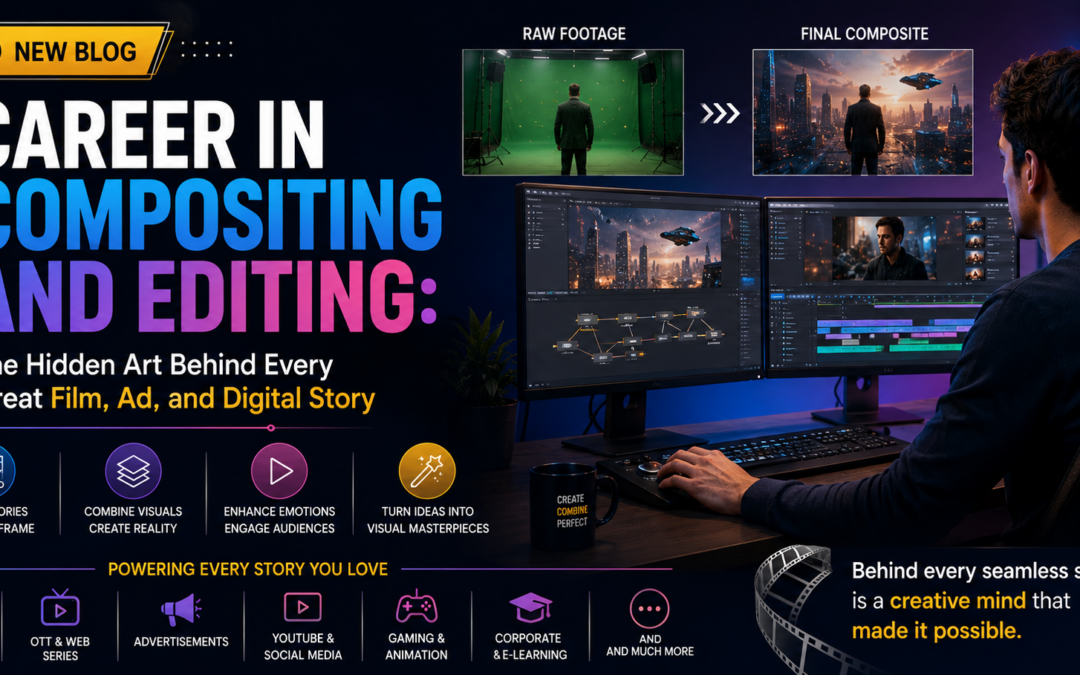
Career in Compositing and Editing: The Hidden Art Behind Every Great Film, Ad, and Digital Story
Introduction
Have you ever watched a blockbuster movie, an engaging advertisement, a web series, or a YouTube video and wondered how everything looks so seamless and polished?
The reality is that what audiences see on screen is often the result of countless hours of work done behind the scenes. While actors, directors, and cinematographers receive much of the attention, another group of creative professionals plays a crucial role in shaping the final visual experience—compositors and editors.
From combining visual effects with live-action footage to transforming hours of raw footage into compelling stories, compositing and editing are essential parts of modern content creation.
As the demand for films, OTT content, advertisements, social media videos, and digital entertainment continues to grow, a Career in Compositing and Editing has become one of the most exciting opportunities in the media and entertainment industry.
In this blog, we’ll explore what compositing and editing involve, why they are important, career opportunities in the field, and how these professionals help bring stories to life.
What Is Compositing?
Compositing is the process of combining multiple visual elements into a single final image or video shot.
A compositor blends various elements such as:
- Live-Action Footage
- CGI Elements
- Visual Effects
- Green Screen Footage
- Background Plates
- Digital Environments
The goal is to create a seamless image where all elements appear as if they naturally belong together.
When audiences watch a film featuring futuristic cities, fantasy creatures, or large-scale action sequences, compositing is often responsible for making these visuals look believable.
What Is Editing?
Editing is the process of selecting, arranging, and refining footage to create a coherent story.
Editors work with raw video clips and transform them into engaging narratives by:
- Organizing Footage
- Trimming Scenes
- Creating Flow
- Improving Pacing
- Enhancing Storytelling
- Adding Transitions
Without editing, even the best footage can feel disconnected and ineffective.
Editing is often described as the stage where a story truly comes together.
Why Compositing and Editing Are Essential
Modern audiences expect high-quality visual experiences.
Whether it’s a movie, advertisement, social media campaign, or OTT series, compositing and editing help ensure content looks professional and engaging.
These processes help:
- Improve visual quality
- Strengthen storytelling
- Create seamless effects
- Enhance viewer engagement
- Deliver cinematic experiences
This growing importance has made a Career in Compositing and Editing highly valuable in today’s creative industries.
How Compositing Creates Visual Magic
Many scenes that appear real on screen are actually created through compositing.
For example:
Green Screen Integration
Actors are filmed against green backgrounds and later placed into digital environments.
Visual Effects Integration
CGI creatures, explosions, and simulations are blended with live footage.
Environment Creation
Different visual elements are combined to create entirely new worlds.
Digital Enhancements
Small visual improvements help create realistic and immersive experiences.
These techniques allow filmmakers to create visuals that would be impossible or extremely expensive to capture in reality.
The Art of Storytelling Through Editing
Editing is much more than simply arranging clips.
Editors influence:
- Emotion
- Suspense
- Pacing
- Tension
- Audience Engagement
The same footage can tell completely different stories depending on how it is edited.
Through careful decision-making, editors shape the viewer’s experience and guide emotions throughout a project.
This creative influence is one reason why a Career in Compositing and Editing can be so rewarding.
Why Choose a Career in Compositing and Editing?
A Career in Compositing and Editing combines creativity, technology, and storytelling.
Students who enjoy:
- Movies
- Visual Effects
- Video Creation
- Storytelling
- Digital Media
- Technology
often find this field highly engaging.
Some key benefits include:
Growing Industry Demand
The need for video content continues increasing across industries.
Creative Work
Professionals contribute directly to visual storytelling.
Diverse Career Paths
Opportunities exist across entertainment, advertising, and digital media.
Freelancing Opportunities
Many editors and compositors work independently with global clients.
Continuous Innovation
New technologies constantly create learning and growth opportunities.
Career in Compositing and Editing After 12th
Many students begin exploring a Career in Compositing and Editing After 12th because of their interest in films, VFX, and digital content creation.
This field is ideal for students who enjoy:
- Creative Problem Solving
- Visual Storytelling
- Technology
- Content Creation
- Media Production
With proper training and practical experience, students can build successful careers in one of the fastest-growing creative industries.
Skills Required for a Career in Compositing and Editing
To succeed in a Career in Compositing and Editing, professionals need both creative and technical skills.
Storytelling Skills
Understanding narrative structure and audience engagement.
Visual Awareness
Recognizing composition, lighting, and visual consistency.
Attention to Detail
Ensuring every frame appears seamless and polished.
Creativity
Finding innovative solutions to visual challenges.
Technical Knowledge
Understanding editing and compositing workflows.
Problem Solving
Managing complex production requirements effectively.
These skills help professionals create high-quality visual content.
Software Used in Compositing and Editing
Industry professionals rely on specialized tools to create and refine content.
Popular software includes:
- Adobe Premiere Pro
- DaVinci Resolve
- Adobe After Effects
- Nuke
- Avid Media Composer
Learning these tools is an important step toward building a successful Career in Compositing and Editing.
Industries Hiring Compositing and Editing Professionals
One of the biggest advantages of a Career in Compositing and Editing is the variety of industries that require these skills.
Film Industry
Creating feature films and cinematic experiences.
Television Industry
Producing programs, promos, and broadcast content.
OTT Platforms
Developing content for streaming services.
Advertising Agencies
Creating commercials and marketing campaigns.
Digital Content Creation
Producing videos for YouTube, social media, and online platforms.
Corporate Communication
Developing presentations, training videos, and internal communications.
This wide range of opportunities makes compositing and editing highly versatile career choices.
The Role of Compositing and Editing in VFX
Visual effects production relies heavily on compositing and editing.
Compositors help:
- Integrate CGI with live footage
- Remove unwanted elements
- Create realistic environments
- Enhance visual quality
Editors ensure that VFX shots fit seamlessly into the overall narrative.
Together, these professionals play a critical role in modern filmmaking and entertainment.
Future Scope of Compositing and Editing
The future of post-production looks extremely promising.
Emerging trends include:
- Virtual Production
- AI-Assisted Editing
- Real-Time Rendering
- Advanced VFX Pipelines
- Interactive Content
- XR Experiences
- Digital Storytelling
As content consumption continues growing globally, demand for skilled professionals will remain strong.
This makes a Career in Compositing and Editing a future-ready profession with excellent growth potential.
Career Opportunities in Compositing and Editing
A Career in Compositing and Editing can lead to a variety of exciting job roles.
Popular positions include:
Video Editor
Transforms raw footage into engaging content.
Compositing Artist
Combines visual elements into seamless final shots.
VFX Compositor
Integrates visual effects into live-action footage.
Post-Production Artist
Supports multiple stages of content finishing.
Motion Graphics Editor
Combines animation with editing workflows.
Content Creator
Produces professional digital media content.
These roles are in demand across multiple industries.
Why More Students Are Choosing This Creative Career
The modern world revolves around video content.
Every platform—from social media and YouTube to OTT services and cinema—depends on skilled professionals who can create compelling visual experiences.
A Career in Compositing and Editing offers the opportunity to:
- Work on exciting projects
- Build creative skills
- Collaborate with talented teams
- Explore multiple industries
- Contribute to impactful storytelling
This combination of creativity and technology makes it an attractive career option for today’s students.
Final Thoughts
Behind every successful film, advertisement, web series, and digital campaign is a team of professionals working tirelessly to create polished and engaging content.
Compositors and editors are among the most important contributors to this process. Their work transforms raw footage and visual elements into stories that entertain, inspire, and connect with audiences.
A Career in Compositing and Editing offers exciting opportunities for students who are passionate about storytelling, visual effects, filmmaking, and digital content creation.
As the demand for high-quality visual content continues to rise, professionals in this field will remain essential to the future of entertainment, advertising, and media production.
For creative individuals looking to combine technology with storytelling, a Career in Compositing and Editing can be a rewarding and future-focused path.
Recent Comments