
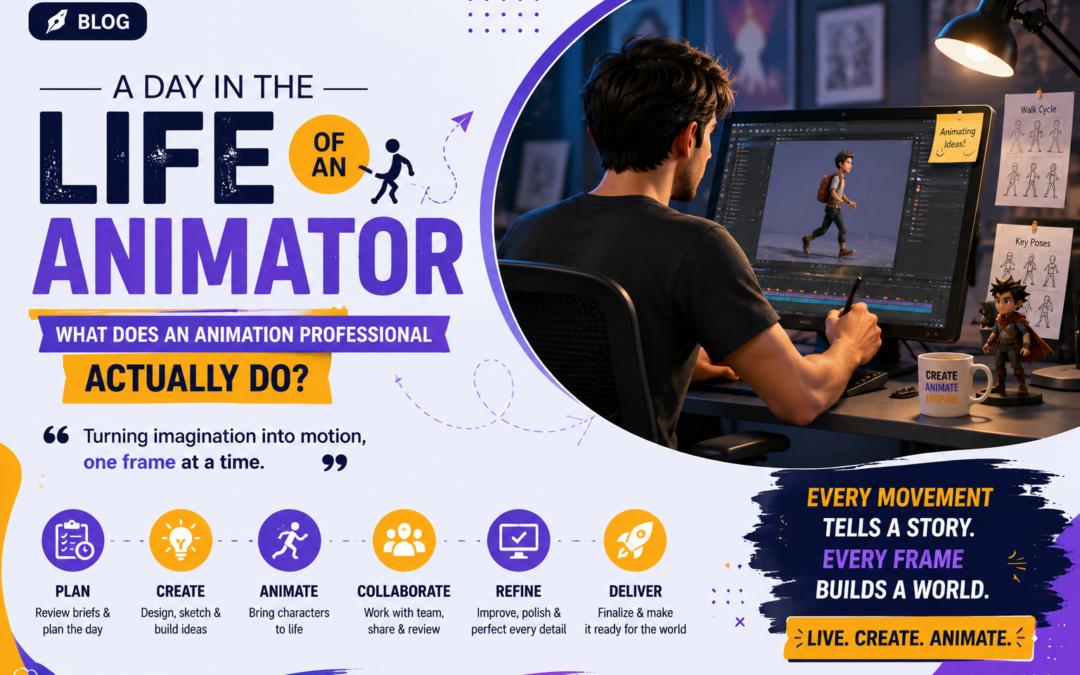
A Day in the Life of an Animator: What Does an Animation Professional Actually Do?
Introduction
When people watch animated movies, television shows, advertisements, video games, or digital content, they often focus on the final result—the colorful characters, exciting action sequences, and engaging stories. However, behind every animated project is a team of skilled professionals working tirelessly to bring ideas to life.
Among these professionals, animators play one of the most important roles. They transform static designs into believable performances by creating movement, emotion, and personality. While many students dream of becoming animators, they often wonder what the job actually involves on a daily basis.
Understanding a Day in the Life of an Animator can help aspiring artists gain realistic insights into the profession and prepare for a successful career in the animation industry.
In this blog, we’ll explore the daily routine of an animator, the responsibilities involved, the tools they use, the challenges they face, and why animation continues to be one of the most exciting creative careers today.
Understanding the Role of an Animator
Before exploring a typical Day in the Life of an Animator, it’s important to understand what animators actually do.
Animators create movement for:
- Characters
- Creatures
- Vehicles
- Props
- Visual Elements
Their work helps audiences connect emotionally with stories and characters.
Whether working in films, television, gaming, advertising, or digital media, animators use creativity and technical skills to create believable motion.
Starting the Workday
A typical Day in the Life of an Animator often begins with reviewing tasks and project updates.
Animators usually start by:
- Checking Production Schedules
- Reviewing Feedback
- Attending Team Meetings
- Planning Daily Tasks
In professional studios, daily meetings help teams stay aligned with project goals and deadlines.
These sessions may involve directors, supervisors, modelers, riggers, and other production team members.
Reviewing Shots and Assignments
After planning the day, animators begin reviewing their assigned work.
This may include:
- Character Performance Shots
- Action Sequences
- Dialogue Scenes
- Gameplay Animations
- Motion Graphics Elements
Before starting animation, artists carefully study references, storyboards, and director feedback.
This preparation ensures that every movement supports the story and creative vision.
Understanding the Scene Requirements
One of the most important parts of a Day in the Life of an Animator is understanding the purpose of each scene.
Animators ask questions such as:
- What emotion should the character express?
- What action is taking place?
- How should the audience feel?
- What is the character thinking?
Animation is not simply about movement—it is about performance and storytelling.
The best animators understand how to communicate ideas through motion.
Blocking the Animation
Blocking is often the first stage of creating an animated scene.
During this process, animators establish:
- Key Poses
- Character Positioning
- Timing
- Scene Structure
Blocking helps visualize the overall performance before refining details.
It allows directors and supervisors to review the scene early and provide feedback.
This stage is a critical part of the Day in the Life of an Animator.
Refining Character Performance
Once blocking is approved, animators begin refining the movement.
This involves:
- Improving Timing
- Adjusting Weight
- Enhancing Body Mechanics
- Adding Facial Expressions
- Creating Natural Motion
The goal is to make characters feel believable and emotionally engaging.
Small details often make a significant difference in animation quality.
Using Animation Principles
Throughout a Day in the Life of an Animator, professionals rely on animation principles to improve movement.
These principles include:
- Timing and Spacing
- Squash and Stretch
- Anticipation
- Follow Through
- Secondary Action
- Ease In and Ease Out
Applying these principles helps create realistic and appealing animation.
Collaborating With Team Members
Animation production is highly collaborative.
Animators regularly work with:
- Directors
- Storyboard Artists
- Modelers
- Riggers
- Lighting Artists
- Compositors
Effective communication is essential for maintaining consistency throughout production.
A large portion of a Day in the Life of an Animator involves teamwork and creative collaboration.
Receiving and Implementing Feedback
Feedback is a normal part of professional animation production.
Supervisors may suggest:
- Performance Improvements
- Timing Adjustments
- Better Acting Choices
- Technical Corrections
Receiving feedback helps improve the final quality of the animation.
Successful animators view revisions as opportunities to strengthen their work.
Problem Solving During Production
Every animation project presents challenges.
Animators frequently solve issues related to:
- Character Movement
- Technical Limitations
- Scene Timing
- Camera Angles
- Performance Quality
Creative problem-solving is one of the most valuable skills in the animation industry.
Software Used by Animators
Professional animators rely on industry-standard software to create their work.
Common tools include:
- Autodesk Maya
- Blender
- Adobe After Effects
- Toon Boom Harmony
- Cinema 4D
Mastering these tools is an important part of building a successful animation career.
Working in Different Industries
A Day in the Life of an Animator can vary depending on the industry.
Film Animation
Focuses on cinematic storytelling and character performance.
Television Animation
Requires efficient workflows and faster production schedules.
Gaming
Creates interactive character and gameplay animations.
Advertising
Develops short-form animated content for marketing campaigns.
Digital Content Creation
Produces animations for social media, online platforms, and educational content.
Each sector offers unique creative opportunities.
Balancing Creativity and Deadlines
One of the biggest challenges animators face is balancing artistic quality with production deadlines.
Projects often involve:
- Tight Schedules
- Client Expectations
- Multiple Revisions
- Team Coordination
Time management is a critical skill for animation professionals.
Learning how to deliver high-quality work efficiently is an important part of the profession.
Continuous Learning and Skill Development
The animation industry constantly evolves.
Successful animators regularly improve their skills by:
- Studying Real-Life Motion
- Practicing Animation Exercises
- Learning New Software
- Following Industry Trends
- Building Personal Projects
Continuous learning is a key component of long-term career success.
What Makes Animation a Rewarding Career?
One reason many people enjoy a Day in the Life of an Animator is the opportunity to combine creativity and storytelling.
Animators contribute to projects that:
- Entertain Audiences
- Inspire Creativity
- Tell Meaningful Stories
- Build Immersive Experiences
Few careers offer the same combination of artistic expression and technical innovation.
Skills Every Animator Should Develop
Students interested in animation should focus on developing:
Observation Skills
Understanding how people and objects move.
Creativity
Generating original ideas and performances.
Patience
Animation requires attention to detail.
Communication
Collaborating effectively with teams.
Technical Knowledge
Understanding animation tools and workflows.
These skills help animators succeed in professional environments.
Future Opportunities for Animators
The demand for animation professionals continues to grow.
Emerging fields include:
- Virtual Production
- Real-Time Animation
- Gaming
- Artificial Intelligence-Assisted Workflows
- Digital Content Creation
- Virtual Reality
- Augmented Reality
These technologies are creating exciting new opportunities for future animators.
Final Thoughts
A typical Day in the Life of an Animator is filled with creativity, collaboration, problem-solving, and storytelling. From planning scenes and creating performances to refining animations and working with production teams, animators play a crucial role in bringing ideas to life.
While the profession requires dedication, patience, and continuous learning, it also offers the opportunity to contribute to films, games, advertisements, and digital experiences enjoyed by audiences worldwide.
For students passionate about creativity, visual storytelling, and character performance, animation remains one of the most rewarding and future-focused careers in the creative industry.
Recent Comments