
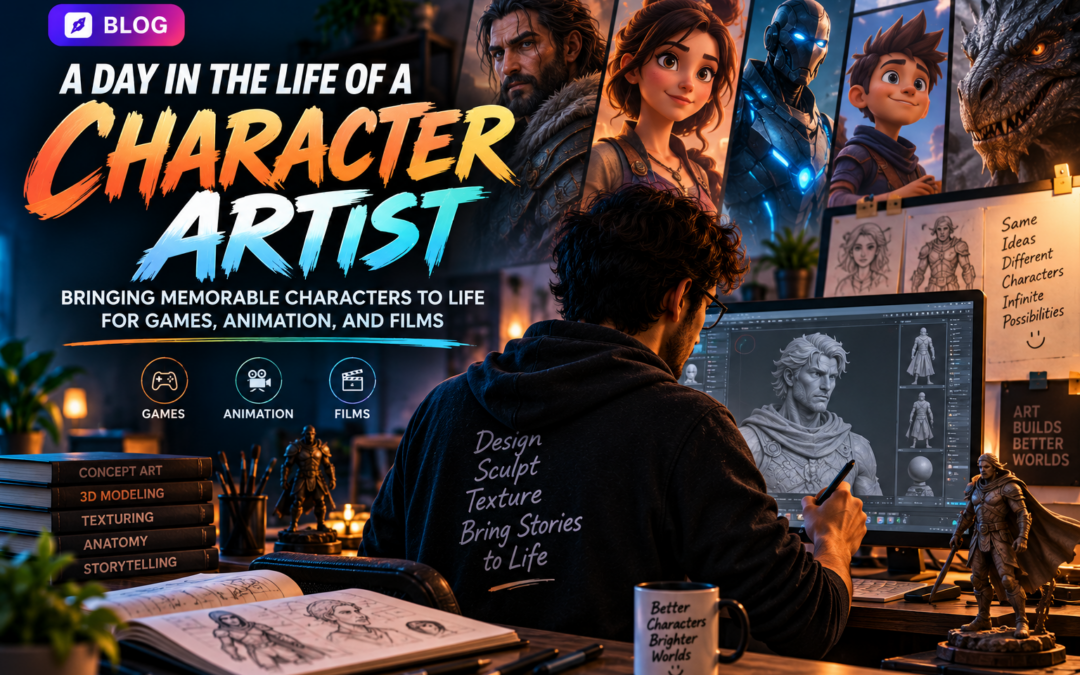
A Day in the Life of a Character Artist: Bringing Memorable Characters to Life for Games, Animation, and Films
Introduction
From heroic superheroes and fantasy warriors to animated animals and futuristic robots, memorable characters are often the heart of games, films, and animated productions. These characters entertain audiences, tell stories, and create emotional connections that remain unforgettable long after the experience ends.
Behind every great digital character is a skilled Character Artist. These creative professionals combine artistic talent, storytelling, anatomy knowledge, and technical expertise to design and build characters that feel believable, expressive, and visually appealing.
As the gaming, animation, and VFX industries continue to grow, Character Artists have become some of the most sought-after professionals in the creative industry. Many students interested in digital art often wonder: What does a Character Artist actually do every day?
Understanding a Day in the Life of a Character Artist helps aspiring artists gain insight into the profession, daily workflow, required skills, industry tools, and career opportunities.
In this blog, we’ll explore how Character Artists transform ideas and concepts into memorable digital characters for games, animation, films, and immersive experiences.
Who Is a Character Artist?
Before exploring a Day in the Life of a Character Artist, it is important to understand the role itself.
A Character Artist is responsible for creating digital characters that appear in:
- Video Games
- Animated Films
- Visual Effects Projects
- Virtual Reality Experiences
- Cinematic Trailers
- Advertising Campaigns
- Interactive Media
Character Artists create:
- Human Characters
- Fantasy Creatures
- Animals
- Robots
- Stylized Characters
- Realistic Digital Humans
Their goal is to design characters that support storytelling while meeting artistic and technical requirements.
Starting the Workday
A typical Day in the Life of a Character Artist often begins with reviewing project requirements and production updates.
Most Character Artists start their day by:
- Checking Emails
- Reviewing Tasks
- Attending Team Meetings
- Evaluating Feedback
- Planning Deliverables
Understanding project priorities helps artists stay productive and meet deadlines.
Understanding Character Requirements
Before creating a character, artists carefully study the project brief.
This usually includes:
- Character Background
- Personality Traits
- Story Requirements
- Art Style
- Technical Specifications
Understanding these details helps ensure that the final character aligns with the creative vision of the project.
This planning stage is an important part of a Day in the Life of a Character Artist.
Research and Reference Collection
Professional Character Artists spend considerable time gathering references.
They may study:
- Human Anatomy
- Clothing Styles
- Facial Features
- Historical References
- Animal Structures
- Fantasy Designs
Reference collection helps artists create believable and visually appealing characters.
Strong research often leads to stronger designs.
Creating Character Concepts
Before moving into 3D production, artists often explore different design ideas.
This stage may involve:
- Character Sketches
- Silhouette Exploration
- Costume Variations
- Expression Studies
- Color Exploration
Concept development helps establish the character’s visual identity.
A successful design communicates personality and purpose instantly.
Sculpting the Character
One of the most exciting parts of a Day in the Life of a Character Artist is digital sculpting.
Artists create detailed character forms by sculpting:
- Facial Features
- Muscles
- Hair Structures
- Clothing Folds
- Accessories
- Surface Details
Digital sculpting allows artists to add realism and personality to their characters.
It is one of the core responsibilities of a Character Artist.
Refining Anatomy and Proportions
A strong understanding of anatomy is essential for creating believable characters.
Artists carefully refine:
- Body Structure
- Facial Proportions
- Hand Details
- Muscle Placement
- Character Silhouettes
Even stylized characters require thoughtful proportions to appear visually appealing.
Anatomy refinement is a regular part of a Day in the Life of a Character Artist.
Creating Clothing and Accessories
Characters often require unique costumes and props.
Artists design and create:
- Armor
- Weapons
- Hats
- Footwear
- Jewelry
- Equipment
These details help strengthen storytelling and make characters more memorable.
Costume design often plays a major role in defining a character’s identity.
Texturing and Material Creation
Once the character model is complete, artists apply textures and materials.
This stage includes:
- Skin Textures
- Fabric Materials
- Leather Surfaces
- Metal Details
- Color Variations
Texturing adds realism and visual richness to the character.
It transforms a simple model into a believable digital personality.
Preparing Characters for Animation
Character Artists often collaborate with rigging and animation teams.
To support animation, they ensure:
- Clean Topology
- Proper Geometry Flow
- Optimized Models
- Technical Compatibility
Good preparation allows characters to move naturally during animation.
This workflow is a critical part of a Day in the Life of a Character Artist.
Collaborating With Creative Teams
Character creation involves collaboration with multiple departments.
Artists regularly work with:
- Concept Artists
- Animators
- Rigging Artists
- Technical Artists
- Art Directors
- Game Designers
Strong communication helps maintain consistency throughout production.
Teamwork is essential on large projects.
Reviewing Feedback and Revisions
Character development often involves multiple rounds of feedback.
Supervisors or clients may request:
- Design Adjustments
- Costume Changes
- Facial Improvements
- Color Revisions
- Technical Updates
Professional Character Artists continuously refine their work to meet project requirements.
Adaptability is an important skill in the industry.
Managing Multiple Character Projects
Depending on the studio, artists may work on several characters simultaneously.
A typical day may include:
- Hero Characters
- Background Characters
- NPC Designs
- Creature Development
- Cinematic Characters
Effective time management helps maintain quality while meeting deadlines.
Software Used by Character Artists
Professional Character Artists use industry-standard software to create high-quality digital characters.
Popular tools include:
Learning these tools is essential for aspiring Character Artists.
Skills Every Character Artist Needs
Success as a Character Artist requires a balance of artistic and technical abilities.
Character Design
Creating visually appealing characters.
Anatomy Knowledge
Understanding human and animal structures.
Sculpting Skills
Building detailed digital models.
Creativity
Developing unique character concepts.
Observation Skills
Studying real-world references effectively.
Communication
Collaborating with production teams.
These skills help artists create memorable and production-ready characters.
Industries Hiring Character Artists
The demand for Character Artists continues to grow across creative industries.
Gaming
Creating playable and non-playable characters.
Animation
Developing characters for animated films and series.
Visual Effects
Building realistic digital humans and creatures.
Virtual Reality
Creating immersive digital experiences.
Advertising
Designing characters for campaigns and promotional content.
Interactive Media
Supporting emerging digital experiences.
These industries offer exciting career opportunities worldwide.
Future Opportunities in Character Art
The future of character creation continues to evolve with technology.
Emerging opportunities include:
- Real-Time Character Creation
- Virtual Production
- AI-Assisted Character Development
- Digital Humans
- Metaverse Experiences
- Interactive Storytelling
- Virtual Influencers
These innovations are creating new possibilities for Character Artists.
Why Students Choose Character Art
Many students are drawn to character art because it combines:
- Creativity
- Storytelling
- Drawing
- Sculpting
- Technology
Character Artists have the unique opportunity to bring imaginative ideas to life and create personalities that audiences remember for years.
The profession offers both artistic satisfaction and strong career potential.
Final Thoughts
A typical Day in the Life of a Character Artist involves creativity, research, sculpting, collaboration, and continuous refinement. From developing character concepts and studying references to sculpting detailed models and preparing them for animation, Character Artists play a vital role in shaping the worlds of games, films, and animation.
As the demand for high-quality digital content continues to grow, Character Artists will remain essential contributors to the creative industry. For students who enjoy drawing, storytelling, anatomy, and digital art, character creation offers an exciting and rewarding career path.
By mastering artistic fundamentals, industry software, and production workflows, aspiring Character Artists can build successful careers creating the unforgettable characters of tomorrow.
Recent Comments