
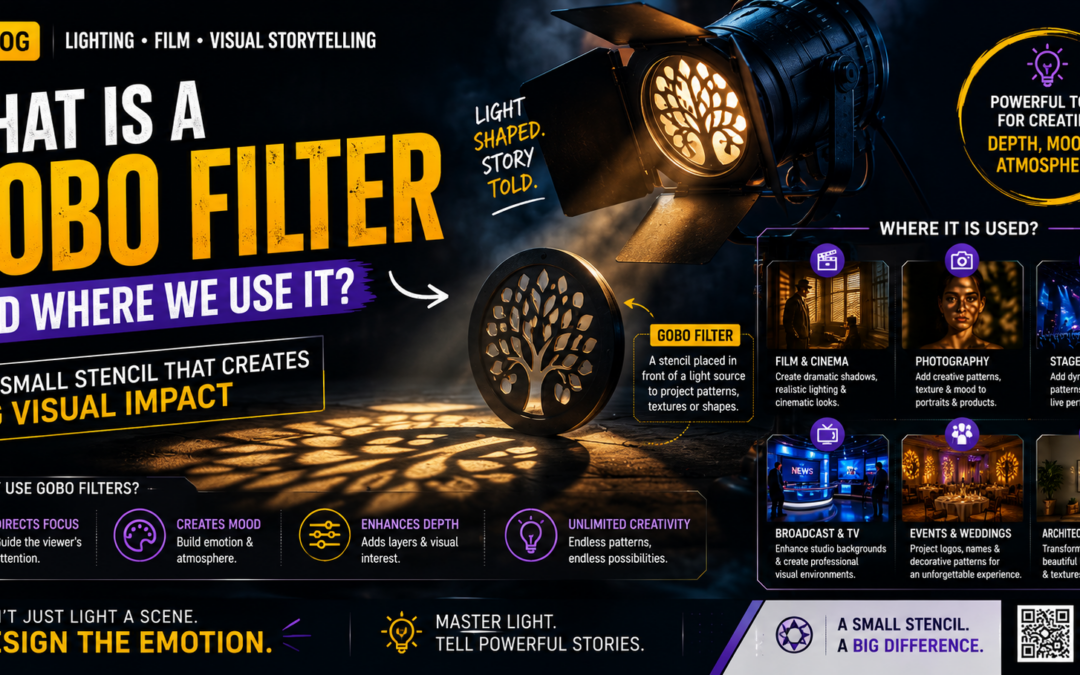
What Is a Gobo Filter and Where Is It Used? A Complete Guide for Lighting, Film & Visual Production
Introduction
Lighting plays one of the most powerful roles in visual storytelling. A single light can completely change how a scene feels. It can create drama, focus attention, build emotion, or transform an ordinary background into something cinematic. In filmmaking, photography, stage productions, and broadcast design, professionals use different lighting tools to create unique visual effects. One of the most creative and useful tools in this process is the Gobo Filter in Lighting.
You may have seen beautiful window-shadow effects in films, dramatic light patterns on a concert stage, or textured lighting in fashion photography. In many of those scenes, a gobo filter is helping create that visual effect.
Even though the name sounds technical, the idea behind a gobo is simple and very creative. It allows lighting artists to shape light and project patterns in a controlled and artistic way.
In this blog, we will understand what a gobo filter is, where it is used, and why it is such an important tool in modern visual production.
What Is a Gobo Filter?
A Gobo Filter in Lighting is a physical or digital stencil placed in front of a light source to create patterns, textures, or shapes.
When light passes through the gobo, it projects a specific design onto a surface.
A gobo can create effects like:
- window shadows
- tree leaves
- abstract textures
- circles and patterns
- logos and text projections
The word “gobo” is commonly explained as “goes before optics” because it sits between the light and the lens.
The purpose of a Gobo Filter in Lighting is to control light creatively instead of simply illuminating an area.
Why Gobo Filters Are Important
Plain lighting can brighten a scene.
But gobo lighting adds visual depth and atmosphere.
It helps creators:
- make scenes more cinematic
- create realistic shadows
- guide viewer attention
- improve storytelling
- add dramatic visual texture
That is why the Gobo Filter in Lighting is widely used by filmmakers, photographers, and lighting designers.
How a Gobo Filter Works
The process is simple.
A light source shines through the gobo.
The stencil blocks some light and allows some light to pass.
The result creates projected shapes or shadows.
The final effect depends on:
- gobo pattern design
- distance between light and surface
- focus settings
- light intensity
- angle of projection
This flexibility makes the Gobo Filter in Lighting extremely useful in creative production.
Types of Gobo Filters
Different productions use different types of gobos.
Common types include:
Metal Gobos
Made from thin metal sheets.
Best for:
- sharp patterns
- logos
- stage lighting
Very durable and widely used.
Glass Gobos
Made using heat-resistant glass.
Best for:
- detailed artwork
- colorful projections
- complex visuals
Often used in premium productions.
Custom Gobos
Created for specific designs.
Used for:
- brand logos
- event projections
- promotional visuals
Custom gobos are popular in advertising and stage productions.
Gobo Filter in Filmmaking
In films, lighting helps tell the story.
A Gobo Filter in Lighting helps filmmakers create cinematic scenes like:
- sunlight through blinds
- moonlight through windows
- forest shadow patterns
- textured wall lighting
These details improve atmosphere and realism.
For example:
A suspense film may use dramatic shadows through window blinds.
A romantic scene may use soft leaf-shaped shadows.
Gobo lighting helps films feel more visually rich.
Gobo Filters in Photography
Photographers also use gobos to create creative portraits and product visuals.
A Gobo Filter in Lighting helps with:
- fashion shoots
- studio portraits
- dramatic background effects
- product photography
Examples include:
- sunlight effect indoors
- patterned shadows on walls
- creative shapes behind a model
These effects improve visual storytelling without requiring heavy editing later.
Gobo Filters in Stage Lighting
Live performances use gobo filters very often.
You can see them in:
- concerts
- theatre performances
- dance shows
- award ceremonies
They create:
- moving textures
- spotlight patterns
- dramatic stage environments
Stage designers love the Gobo Filter in Lighting because it makes performances feel more immersive.
Broadcast and Studio Production
News studios, entertainment shows, and broadcast sets often use creative lighting.
Gobos help create:
- studio background textures
- lighting patterns on set walls
- brand-focused stage visuals
Broadcast design depends heavily on clean visual presentation.
That is why the Gobo Filter in Lighting is useful in television and studio production.
Event and Wedding Production
Many event companies use gobos.
They project:
- couple initials
- wedding logos
- decorative patterns
- brand names
These visuals make spaces feel personalized and premium.
This is another reason why Gobo Filter in Lighting is widely used beyond film and photography.
Gobo Filter vs Color Gels
People often confuse gobos with color gels.
Both work with lights—but differently.
Gobo Filter
Creates:
- patterns
- shapes
- textures
Color Gels
Changes:
- light color
- mood
- atmosphere
Example:
A gobo creates window shadows.
A blue gel makes the light feel like moonlight.
Professionals often combine both for stronger results.
Why Gobo Lighting Feels Cinematic
Viewers naturally respond to contrast and texture.
Patterned lighting feels dramatic because it adds:
- depth
- visual layers
- focus
- storytelling atmosphere
A flat-lit room feels ordinary.
A textured shadow feels cinematic.
That is why the Gobo Filter in Lighting is so powerful in visual storytelling.
Common Creative Uses of Gobos
Popular uses include:
- tree leaf shadows
- city window reflections
- spotlight texture
- rain-style patterns
- abstract motion lighting
- brand projection visuals
These effects instantly improve visual quality.
Tools Used with Gobos
Lighting teams use gobos with equipment such as:
- LED spotlight
- Profile light
- Adobe After Effects
- Unreal Engine
Real lights create practical effects.
Software helps enhance or simulate visuals in post-production.
Challenges Beginners Face
Many beginners struggle with:
- wrong light angle
- blurry projections
- overexposed lighting
- weak pattern visibility
Practice helps improve:
- focus
- placement
- scene planning
Understanding light direction is important when learning Gobo Filter in Lighting.
Skills Needed for Better Gobo Lighting
To use gobos effectively, students should learn:
- lighting basics
- shadow direction
- cinematic framing
- composition
- color psychology
- scene storytelling
These skills improve overall visual creativity.
Future of Gobo Lighting
Modern productions now combine gobos with:
- LED systems
- programmable lighting
- virtual production
- digital stage design
Even with advanced technology, practical lighting tools remain valuable.
The Gobo Filter in Lighting continues to be an important creative technique.
Career Opportunities
Learning creative lighting can help in careers like:
- filmmaking
- photography
- broadcast production
- stage lighting
- event production
- visual design
Professionals who understand lighting techniques are valuable across creative industries.
Final Thoughts
A gobo filter may look like a simple lighting accessory, but its impact is huge.
It transforms ordinary lighting into cinematic visual storytelling.
From films and photography to stage shows and broadcast production, the Gobo Filter in Lighting helps create mood, texture, focus, and visual drama.
For students learning filmmaking, animation, VFX, or production design, understanding gobos is a smart and practical creative skill.
Because sometimes the smallest lighting detail creates the strongest visual impact.
Recent Comments