
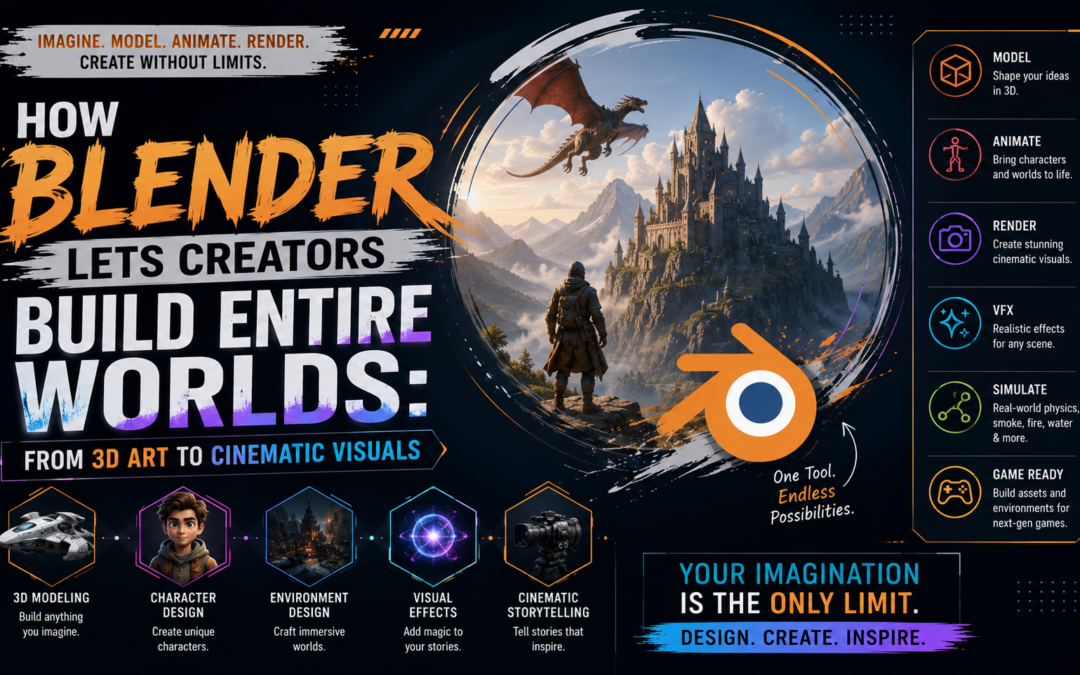
How Blender Lets Creators Build Entire Worlds: From 3D Art to Cinematic Visuals
Introduction
The world of digital creativity has changed dramatically over the last few years. Today, creators can design realistic environments, animated characters, cinematic scenes, and visual effects directly from their computers. One of the biggest tools driving this creative revolution is Blender for 3D Art.
From independent artists to professional studios, creators around the world are using Blender to produce high-quality 3D content. Whether it is animation, gaming, product visualization, or cinematic storytelling, Blender has become one of the most powerful tools in modern digital design.
What makes Blender unique is its ability to combine creativity, technology, and storytelling in a single platform. It allows artists to build entire digital worlds from scratch.
In this blog, we will explore how Blender for 3D Art is helping creators bring imagination to life and why it has become one of the most important tools in the creative industry.
What Is Blender?
Blender is a professional open-source 3D software used for:
- 3D modeling
- animation
- visual effects
- rendering
- motion graphics
- simulation
- game asset creation
It provides creators with everything needed to build realistic and cinematic visuals.
Today, Blender for 3D Art is widely used by students, freelancers, studios, and digital creators worldwide.
Why Blender Became So Popular
One of the biggest reasons Blender gained popularity is accessibility.
Unlike many expensive 3D software tools, Blender is free and constantly evolving.
Creators love it because it offers:
- professional features
- strong community support
- regular updates
- creative flexibility
This has made Blender for 3D Art more approachable for beginners and professionals alike.
Creating 3D Models in Blender
3D modeling is one of Blender’s strongest features.
Artists can create:
- characters
- vehicles
- buildings
- props
- environments
Using shapes, sculpting tools, and modifiers, creators can turn simple ideas into detailed 3D objects.
Modeling is the foundation of Blender for 3D Art because every digital world begins with structure and form.
How Blender Helps Build Cinematic Worlds
One of the most exciting aspects of Blender is environment creation.
Artists can build:
- futuristic cities
- fantasy landscapes
- realistic interiors
- sci-fi worlds
By combining modeling, lighting, textures, and camera work, creators can produce scenes that feel cinematic and immersive.
This ability makes Blender for 3D Art incredibly powerful for storytelling.
Lighting Makes Scenes Feel Real
Lighting is one of the most important elements in 3D design.
Good lighting helps create:
- mood
- depth
- realism
- atmosphere
In Blender, creators use:
- HDRI lighting
- area lights
- volumetric effects
- shadows
Professional lighting techniques are essential in Blender for 3D Art because they transform simple scenes into cinematic visuals.
Realistic Materials and Textures
Objects feel believable when they have realistic surfaces.
Blender allows creators to add:
- metal textures
- glass reflections
- fabric details
- roughness and imperfections
Textures help bring life to digital objects.
Detailed materials are an important part of Blender for 3D Art because realism depends on surface quality.
Animation Brings Digital Worlds to Life
Static scenes become engaging through animation.
Blender allows artists to animate:
- characters
- cameras
- environments
- effects
Animation adds emotion and storytelling.
This is why animation is one of the most creative aspects of Blender for 3D Art.
Blender in VFX and Cinematic Production
Blender is also widely used in VFX workflows.
Artists use it for:
- CGI creation
- camera tracking
- compositing
- simulations
It can combine live-action footage with digital elements to create realistic visual effects.
This makes Blender for 3D Art valuable for filmmaking and cinematic production.
Motion Graphics in Blender
Modern creators use Blender for motion graphics and visual design.
This includes:
- logo animations
- abstract visuals
- dynamic typography
- product showcases
Motion graphics add energy and movement to content.
Blender’s flexibility makes it ideal for creative experimentation.
Rendering: Turning Scenes Into Final Visuals
Rendering converts 3D scenes into final images or videos.
Blender offers rendering engines like:
- Eevee
- Cycles
These help creators achieve:
- realistic lighting
- reflections
- cinematic depth
Rendering quality is one of the biggest strengths of Blender for 3D Art.
Blender in Gaming Industry
Game developers use Blender to create:
- game environments
- characters
- props
- animations
Many indie game creators prefer Blender because it supports multiple creative workflows.
This makes Blender for 3D Art highly relevant in the gaming industry.
Why Blender Is Great for Beginners
Beginners often choose Blender because:
- it is free
- tutorials are widely available
- the community is active
- it supports multiple creative fields
Students can learn modeling, animation, VFX, and rendering using a single platform.
This makes Blender for 3D Art an excellent starting point for creative careers.
Common Challenges Beginners Face
While Blender is powerful, beginners may struggle with:
- complex interface
- understanding 3D space
- lighting and rendering
- animation timing
However, consistent practice helps improve these skills over time.
Learning fundamentals is essential for mastering Blender for 3D Art.
Skills Needed to Improve in Blender
To create professional work, artists should focus on:
- observation skills
- composition
- lighting
- storytelling
- patience and consistency
Software knowledge alone is not enough.
Creative thinking plays a major role in Blender for 3D Art.
Future of Blender and 3D Creativity
The future of 3D design is growing rapidly.
Industries using Blender include:
- films
- gaming
- advertising
- architecture
- product visualization
- virtual production
As technology evolves, Blender for 3D Art will continue becoming more important in creative industries.
Final Thoughts
Blender has transformed how creators build digital worlds.
From modeling and animation to cinematic rendering and VFX, it gives artists the power to turn imagination into reality.
The strength of Blender for 3D Art lies in its flexibility, accessibility, and creative freedom.
For students, designers, and aspiring artists, learning Blender is not just about software—it is about learning how to create experiences, stories, and entire worlds through digital creativity.
Recent Comments