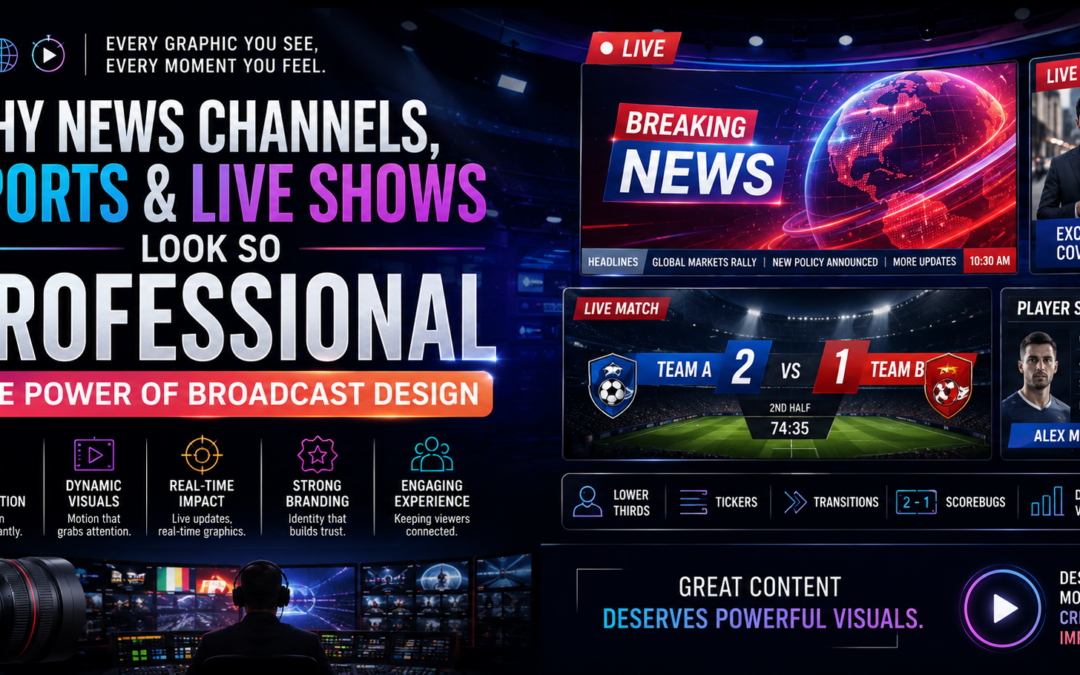
Why News Channels, Sports & Live Shows Look So Professional: The Power of Broadcast Design in Media
Introduction
Have you ever watched a live sports match, a breaking news segment, or a major entertainment show and noticed how visually polished everything feels? From animated graphics and scoreboards to smooth transitions and on-screen information, every detail is carefully designed. This professional visual experience is created through Broadcast Design in Media.
Broadcast design is one of the most important parts of modern television and digital streaming. It combines graphic design, motion graphics, animation, branding, and storytelling to improve how audiences experience content.
Today, viewers expect fast, visually engaging, and professional-looking media. Whether it is a news channel, sports broadcast, or live event, broadcast visuals help maintain attention and create trust.
In this blog, we will explore how Broadcast Design in Media shapes modern content and why it plays such a powerful role in television and live productions.
What Is Broadcast Design in Media?
Broadcast Design in Media refers to the visual system used in television channels, sports broadcasts, live shows, OTT platforms, and digital media productions.
It includes:
- animated titles
- lower thirds
- scoreboards
- transitions
- live graphics
- motion backgrounds
- channel branding
The goal is to make content visually organized, engaging, and easy to understand.
Why Broadcast Design Matters
Modern audiences consume large amounts of content every day.
Without strong visuals, viewers quickly lose interest.
That is why Broadcast Design in Media is essential for:
- grabbing attention
- organizing information
- improving viewer experience
- building channel identity
Professional visuals create a sense of quality and trust.
How News Channels Use Broadcast Design
News channels rely heavily on visual communication.
Viewers receive information through:
- headlines
- tickers
- breaking news animations
- live graphics
- maps and charts
These elements help viewers understand information quickly.
Effective Broadcast Design in Media ensures that important updates remain clear and engaging.
Role of Motion Graphics in Broadcast Design
Motion graphics are a major part of broadcast visuals.
They are used for:
- animated intros
- transitions
- title sequences
- information displays
Smooth motion graphics make broadcasts feel energetic and modern.
This is why motion design is central to Broadcast Design in Media.
Why Sports Broadcasts Feel So Exciting
Sports channels use dynamic visuals to increase excitement.
This includes:
- live score graphics
- player statistics
- replay animations
- match countdowns
Fast-paced graphics create emotional energy.
Professional Broadcast Design in Media helps make live sports more immersive for viewers.
Channel Branding Creates Recognition
Every major channel has its own visual identity.
This includes:
- logo animation
- color palette
- typography
- transition style
Consistent visuals help audiences instantly recognize the brand.
Strong branding is one of the most important aspects of Broadcast Design in Media.
Live Shows Depend on Real-Time Graphics
Award shows, concerts, and live events use graphics continuously.
These visuals provide:
- event information
- performer names
- audience interaction
- visual atmosphere
Broadcast graphics help keep live productions visually active and engaging.
That is why real-time visuals are essential in Broadcast Design in Media.
Typography Plays a Major Role
Text appears constantly during broadcasts.
Examples include:
- news headlines
- sports statistics
- live updates
- subtitles
Typography must remain:
- readable
- balanced
- visually clear
Professional typography is an important part of Broadcast Design in Media.
Color Psychology in Broadcast Design
Colors influence viewer emotions and perception.
For example:
- red creates urgency in news
- blue creates trust
- bright colors increase excitement in sports
Broadcast designers carefully choose colors to support content tone.
Color strategy is a major element of Broadcast Design in Media.
Technology Behind Broadcast Graphics
Modern broadcasts use advanced tools and software.
Popular tools include:
- Adobe After Effects
- Cinema 4D
- Vizrt
- Unreal Engine
These tools help create smooth animations and real-time visuals.
However, creativity and planning remain the foundation of Broadcast Design in Media.
Common Mistakes in Broadcast Design
Poor broadcast visuals can confuse viewers.
Common mistakes include:
- cluttered layouts
- unreadable text
- excessive animations
- inconsistent branding
- poor timing
Avoiding these issues is important for successful Broadcast Design in Media.
Why Broadcast Design Feels Invisible
Good broadcast design supports content without distracting viewers.
The best visuals feel natural and seamless.
Viewers focus on the content while graphics quietly improve the experience.
This invisible support is what makes Broadcast Design in Media so powerful.
Career Opportunities in Broadcast Design
The demand for broadcast designers is growing across:
- television networks
- sports production
- OTT platforms
- digital streaming
- live event production
Professionals skilled in Broadcast Design in Media can work in multiple creative industries.
Skills Required for Broadcast Design
To succeed in this field, students should focus on:
- motion graphics
- animation principles
- typography
- visual storytelling
- branding
- timing and transitions
Learning these fundamentals helps build strong skills in Broadcast Design in Media.
Future of Broadcast Design in Media
The future of broadcasting includes:
- virtual studios
- real-time graphics
- AI-driven visuals
- interactive broadcasts
- immersive experiences
As media evolves, Broadcast Design in Media will become even more advanced and visually dynamic.
Final Thoughts
Broadcast design is one of the hidden forces behind professional television and live media.
From news channels and sports broadcasts to concerts and streaming platforms, visuals shape how audiences experience content.
The power of Broadcast Design in Media lies in its ability to communicate information clearly while creating energy, excitement, and brand identity.
For students and creative professionals, learning broadcast design opens doors to a fast-growing and highly creative industry.
Recent Comments