
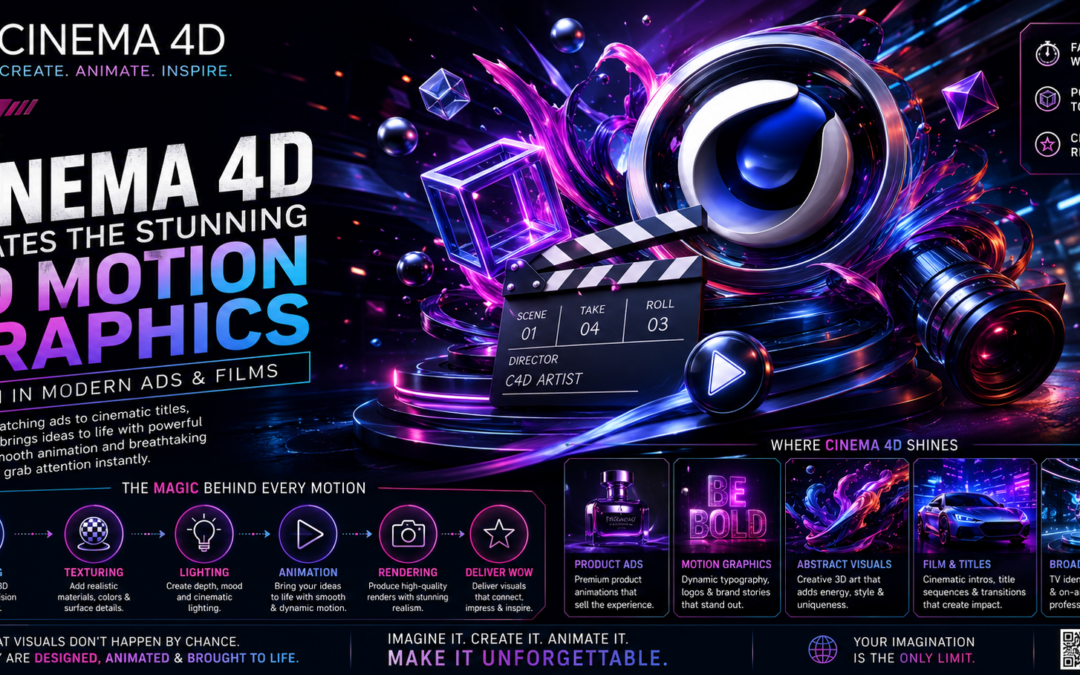
How Cinema 4D Creates the Stunning 3D Motion Graphics Seen in Modern Ads & Films
Introduction
Modern advertisements, film intros, product commercials, and digital brand campaigns are filled with visually stunning animations that instantly grab attention. Smooth 3D motion, cinematic lighting, abstract visuals, and premium product animations have become a major part of modern visual storytelling. Behind many of these eye-catching visuals is one of the most powerful creative tools in the industry — Cinema 4D Motion Graphics.
From luxury product advertisements to high-end motion graphics used in films and broadcast media, Cinema 4D has become a favorite software for designers, motion artists, and creative studios. Its ability to combine animation, motion graphics, rendering, and visual effects makes it one of the most important tools in modern digital media.
Today, brands compete for attention across social media, television, OTT platforms, and digital campaigns. To stand out, they need visuals that feel cinematic, modern, and visually engaging. This is where Cinema 4D Motion Graphics plays a major role.
In this blog, we will explore how Cinema 4D creates stunning 3D motion graphics used in modern ads and films, and why it has become such an important tool in the creative industry.
What Is Cinema 4D?
Cinema 4D is a professional 3D software widely used for:
- motion graphics
- animation
- product visualization
- visual effects
- broadcast design
- cinematic rendering
It is known for its user-friendly workflow and powerful motion design capabilities.
Today, Cinema 4D Motion Graphics is widely used by motion designers, advertisers, filmmakers, and digital creators worldwide.
Why Cinema 4D Is Popular in Motion Graphics
One of the biggest reasons Cinema 4D became popular is its speed and flexibility.
Artists can quickly create:
- smooth animations
- abstract visuals
- cinematic transitions
- realistic product renders
Its workflow is especially loved by motion graphics artists because it allows creative experimentation without overly complicated processes.
This ease of use has made Cinema 4D Motion Graphics highly popular in advertising and media industries.
How Motion Graphics Improve Modern Ads
Modern ads need to capture attention instantly.
Motion graphics help brands:
- create visual excitement
- improve storytelling
- explain products clearly
- make advertisements memorable
From animated logos to luxury product showcases, motion graphics create a premium feel.
That is why Cinema 4D Motion Graphics has become a major part of modern advertising campaigns.
Product Visualization in Cinema 4D
Many luxury advertisements use 3D product visualization.
Cinema 4D helps artists create:
- realistic smartphones
- watches
- cars
- cosmetics
- tech products
Through advanced lighting and rendering, products look cinematic and attractive.
This is one of the strongest applications of Cinema 4D Motion Graphics in commercial advertising.
Cinematic Lighting Creates Premium Visuals
Lighting is one of the biggest reasons some visuals feel cinematic.
Artists use lighting to create:
- depth
- reflections
- mood
- realism
Cinema 4D allows designers to experiment with:
- soft lighting
- dramatic shadows
- glowing effects
- studio setups
Professional lighting is essential in Cinema 4D Motion Graphics because it transforms simple scenes into premium visuals.
Animation Makes Visuals Feel Alive
Motion is what makes graphics engaging.
Cinema 4D helps artists animate:
- text
- objects
- cameras
- transitions
- environments
Smooth animation improves energy and storytelling.
Animation is one of the most powerful aspects of Cinema 4D Motion Graphics because movement creates emotional and visual impact.
Role of Abstract 3D Design
Modern motion graphics often include abstract 3D elements.
These visuals are used in:
- brand advertisements
- music videos
- tech intros
- digital campaigns
Abstract motion graphics create futuristic and artistic experiences.
This creative flexibility makes Cinema 4D Motion Graphics highly valuable for modern visual media.
Broadcast Design and Cinema 4D
Cinema 4D is also widely used in broadcast design.
Artists create:
- TV intros
- sports graphics
- live show visuals
- news animations
Broadcast graphics need smooth motion and professional presentation.
This is why Cinema 4D Motion Graphics is heavily used in television and digital broadcasting industries.
Typography Animation in Cinema 4D
Animated typography is another major part of motion graphics.
Cinema 4D allows artists to create:
- cinematic title sequences
- dynamic text animations
- logo reveals
- promotional intros
Good typography animation improves branding and viewer engagement.
Typography is an important component of Cinema 4D Motion Graphics.
Realistic Rendering Enhances Visual Quality
Rendering converts 3D scenes into final visuals.
Cinema 4D supports realistic rendering with:
- reflections
- shadows
- textures
- global illumination
High-quality rendering helps visuals feel cinematic and professional.
Rendering quality is one of the reasons Cinema 4D Motion Graphics stands out in modern advertising and film production.
Cinema 4D in Films and Entertainment
Many entertainment projects use Cinema 4D for:
- title sequences
- visual effects
- transitions
- cinematic graphics
It is commonly used alongside other creative tools in professional pipelines.
This makes Cinema 4D Motion Graphics highly relevant in films, OTT content, and digital entertainment.
Why Brands Love Cinema 4D Visuals
Brands prefer high-quality visuals because they improve audience perception.
Premium motion graphics help brands appear:
- modern
- professional
- innovative
- visually attractive
This is why companies invest heavily in Cinema 4D Motion Graphics for advertising and digital campaigns.
Common Mistakes Beginners Make
Many beginners struggle because of:
- overusing effects
- poor lighting
- weak animation timing
- cluttered compositions
- unrealistic materials
Good motion graphics require balance and attention to detail.
Avoiding these mistakes is important when learning Cinema 4D Motion Graphics.
Skills Required for Cinema 4D Motion Graphics
To create professional work, artists should focus on:
- animation principles
- composition
- lighting
- color balance
- timing and spacing
- storytelling
Software knowledge alone is not enough.
The true strength of Cinema 4D Motion Graphics comes from combining creativity with technical skills.
Future of Cinema 4D Motion Graphics
The future of motion graphics is evolving rapidly with:
- AI-assisted animation
- real-time rendering
- virtual production
- immersive visual experiences
As digital content continues growing, the demand for premium visuals will increase.
This means Cinema 4D Motion Graphics will remain highly important in modern media industries.
Career Opportunities in Cinema 4D
Learning Cinema 4D can open opportunities in:
- advertising agencies
- motion graphics studios
- film production
- broadcast media
- social media content creation
- digital branding
Professionals skilled in Cinema 4D Motion Graphics are in high demand across creative industries.
Final Thoughts
Cinema 4D has transformed how modern motion graphics are created for ads, films, and digital media.
From cinematic product renders and typography animation to broadcast visuals and abstract 3D art, it allows creators to build visually stunning experiences.
The power of Cinema 4D Motion Graphics lies in its ability to combine creativity, motion, lighting, and storytelling into a single visual language.
For students and aspiring designers, learning Cinema 4D is not just about creating animations—it is about learning how to create visuals that capture attention and leave lasting impressions.
Recent Comments