
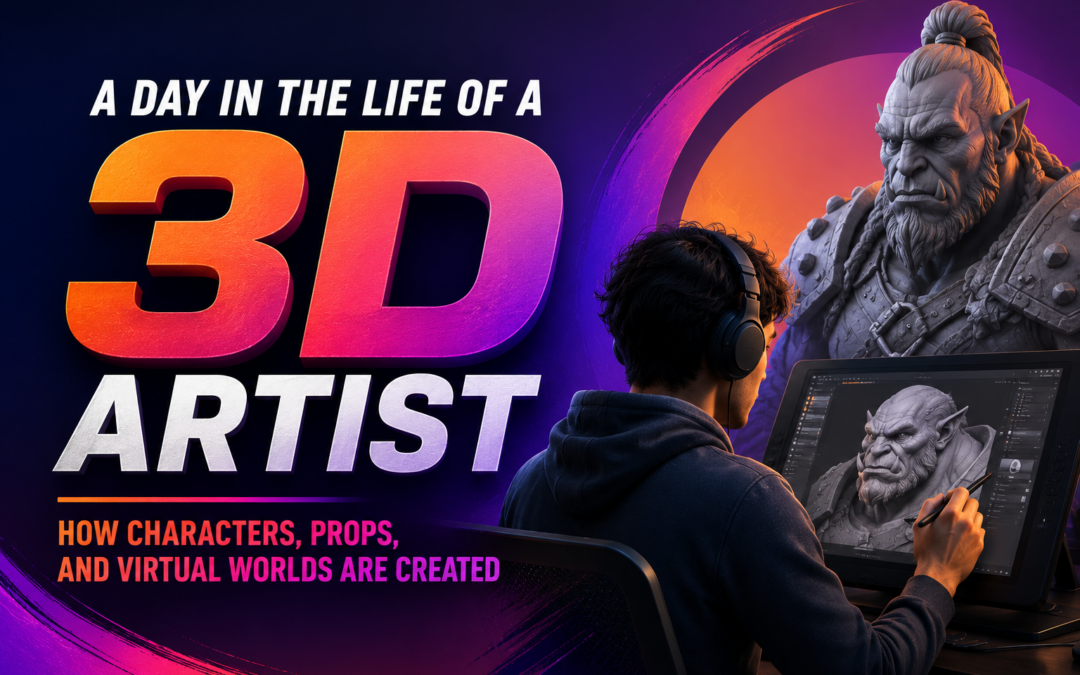
A Day in the Life of a 3D Artist: How Characters, Props, and Virtual Worlds Are Created
Introduction
From animated films and blockbuster games to visual effects and virtual reality experiences, 3D art is everywhere. The realistic characters, detailed environments, futuristic vehicles, and immersive digital worlds we see on screen are often created by talented 3D Artists.
As technology continues to evolve, the demand for skilled 3D Artists is growing across industries such as animation, gaming, VFX, architecture, advertising, and product visualization. Many students who are passionate about creativity and technology often wonder, “What does a 3D Artist actually do every day?”
Understanding a Day in the Life of a 3D Artist provides valuable insight into the profession, the creative process, industry workflows, and the exciting career opportunities available in the world of digital art.
In this blog, we’ll explore the daily routine of a 3D Artist and discover how characters, props, and virtual worlds are brought to life.
Who Is a 3D Artist?
Before exploring a Day in the Life of a 3D Artist, it’s important to understand the role itself.
A 3D Artist creates digital assets that can be used in:
- Animated Films
- Video Games
- Visual Effects Projects
- Virtual Reality Experiences
- Architectural Visualizations
- Product Designs
- Advertising Campaigns
These assets may include:
- Characters
- Props
- Vehicles
- Buildings
- Environments
- Creatures
- Digital Objects
A 3D Artist combines artistic creativity with technical skills to transform ideas into realistic or stylized digital creations.
Starting the Workday
A typical Day in the Life of a 3D Artist usually begins with reviewing project updates and production tasks.
Most professionals start their day by:
- Checking Emails
- Reviewing Assignments
- Attending Team Meetings
- Planning Daily Deliverables
- Organizing Project Files
Production schedules and deadlines often determine the priorities for the day.
Understanding Project Requirements
Before creating any asset, 3D Artists carefully review project requirements.
This includes understanding:
- Client Expectations
- Creative Briefs
- Art Style
- Technical Specifications
- Project Goals
Whether working on a realistic game environment or a stylized animated character, understanding the project’s vision is essential.
This planning phase is a critical part of a Day in the Life of a 3D Artist.
Research and Reference Collection
Professional 3D Artists rarely begin modeling without references.
They spend time gathering:
- Photographs
- Concept Art
- Design Sketches
- Material References
- Lighting References
Research helps ensure accuracy, consistency, and visual quality.
Reference collection also helps artists understand shapes, proportions, and details before modeling begins.
Creating 3D Models
Modeling is one of the most important tasks in a Day in the Life of a 3D Artist.
This process involves creating digital objects using specialized software.
Artists may model:
- Characters
- Weapons
- Furniture
- Vehicles
- Buildings
- Environmental Assets
Good modeling requires attention to detail, proportion, and structure.
The quality of the model often determines the success of later production stages.
Sculpting Detailed Characters
For character creation, many 3D Artists use digital sculpting techniques.
Sculpting allows artists to create:
- Facial Features
- Muscles
- Clothing Details
- Skin Textures
- Creature Anatomy
This process is commonly used in animation, gaming, and VFX projects.
Sculpting helps bring realism and personality to digital characters.
Applying Textures and Materials
After modeling, artists apply textures and materials to their assets.
This stage involves defining:
- Colors
- Surface Details
- Fabric Appearance
- Metal Properties
- Wood Textures
- Skin Characteristics
Texturing transforms simple models into believable digital objects.
It is a key part of a Day in the Life of a 3D Artist.
Lighting the Scene
Lighting plays a major role in how a 3D scene looks and feels.
Artists use lighting to:
- Create Mood
- Enhance Realism
- Highlight Details
- Guide Viewer Attention
Proper lighting can dramatically improve the visual impact of a scene.
Many artists spend considerable time refining lighting setups.
Rendering Final Images
Once models, textures, and lighting are complete, the scene is rendered.
Rendering converts the 3D scene into a final image or animation.
During this stage, artists review:
- Visual Quality
- Shadows
- Reflections
- Textures
- Performance
Rendering is often one of the most technically demanding parts of the workflow.
Collaborating With Other Departments
A Day in the Life of a 3D Artist involves collaboration with multiple teams.
These may include:
- Animators
- Game Designers
- VFX Artists
- Technical Artists
- Lighting Artists
- Creative Directors
Strong teamwork helps ensure consistency throughout production.
Large projects often require artists to coordinate closely with other specialists.
Reviewing Feedback and Revisions
Feedback is a regular part of the creative process.
Clients, supervisors, or art directors may request:
- Design Changes
- Additional Details
- Texture Improvements
- Lighting Adjustments
- Optimization Updates
Professional artists continuously refine their work based on feedback.
Adaptability is a valuable skill in the industry.
Optimizing Assets for Production
Many 3D Artists work on projects that require optimized assets.
Optimization may involve:
- Reducing Polygon Counts
- Improving Performance
- Managing Texture Sizes
- Preparing Assets for Games
Efficient assets help ensure smooth performance across platforms.
This is particularly important in gaming and real-time applications.
Software Used by 3D Artists
Professional 3D Artists rely on industry-standard tools.
Popular software includes:
Learning these tools can significantly improve career opportunities.
Skills Every 3D Artist Needs
Success in 3D art requires a combination of creative and technical skills.
Creativity
Developing original and visually appealing designs.
Observation Skills
Studying real-world objects and environments.
Modeling Skills
Creating accurate and detailed 3D assets.
Texturing Knowledge
Applying realistic materials and surfaces.
Communication
Collaborating effectively with teams.
Problem Solving
Addressing creative and technical challenges.
These skills form the foundation of a successful career in 3D art.
Industries Hiring 3D Artists
The demand for 3D Artists extends across multiple industries.
Animation
Creating characters and environments for animated productions.
Gaming
Building assets and worlds for video games.
Visual Effects
Supporting film and television productions.
Architecture
Creating realistic building visualizations.
Product Design
Developing digital prototypes and marketing visuals.
Advertising
Producing engaging promotional content.
These industries offer diverse and rewarding career opportunities.
Future Opportunities in 3D Art
The future of 3D art continues to evolve rapidly.
Emerging opportunities include:
- Virtual Reality
- Augmented Reality
- Real-Time Rendering
- Virtual Production
- Metaverse Experiences
- Digital Twins
- AI-Assisted Content Creation
These technologies are creating exciting new possibilities for 3D Artists.
Why Students Choose a Career in 3D Art
Many students are attracted to 3D art because it combines:
- Creativity
- Technology
- Storytelling
- Design
- Innovation
The profession offers opportunities to work on films, games, advertisements, and cutting-edge digital experiences.
It is an exciting career for individuals who enjoy bringing ideas to life.
Final Thoughts
A typical Day in the Life of a 3D Artist involves creativity, technical skill, collaboration, and continuous learning. From modeling characters and creating environments to applying textures, lighting scenes, and preparing final renders, 3D Artists play a vital role in modern digital production.
As industries continue to adopt 3D technologies, the demand for talented artists is expected to grow. For students interested in animation, gaming, VFX, and digital design, 3D art offers a rewarding and future-focused career path.
By developing strong artistic fundamentals and mastering industry-standard tools, aspiring 3D Artists can build successful careers creating the digital worlds of tomorrow.
Recent Comments