
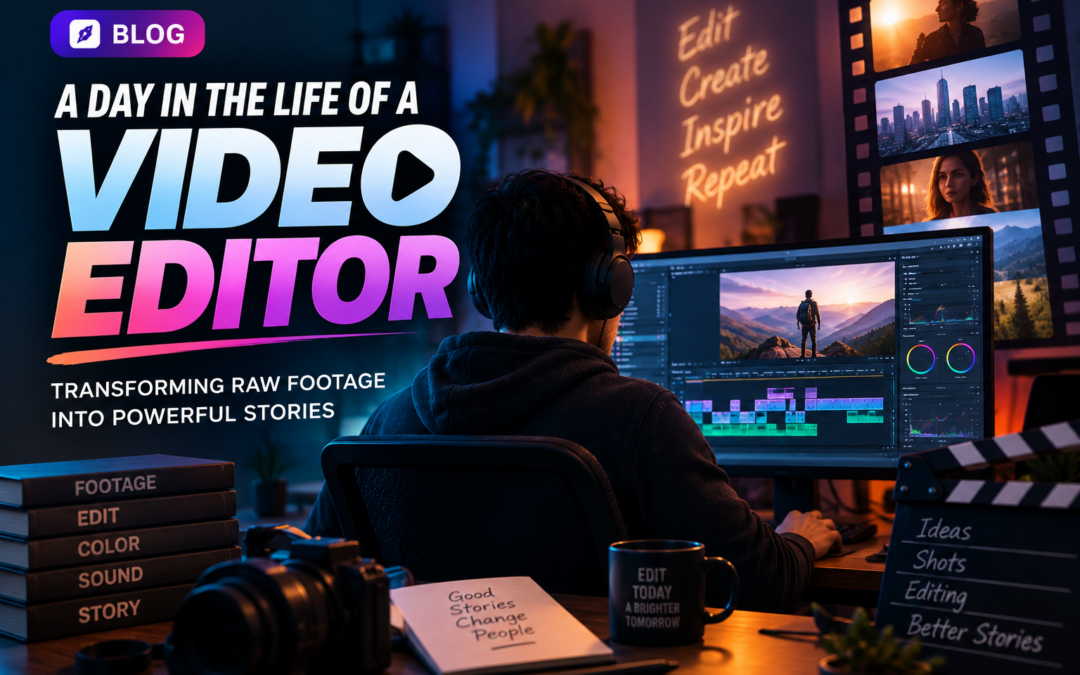
A Day in the Life of a Video Editor: Transforming Raw Footage Into Powerful Stories
Introduction
Every film, advertisement, YouTube video, documentary, social media reel, and corporate presentation goes through a crucial stage before reaching audiences—the editing process. While cameras capture the footage, it is the Video Editor who shapes that footage into a meaningful and engaging story.
Video editing is often called the invisible art of filmmaking because viewers rarely notice the countless creative decisions made behind the scenes. From selecting the best shots and arranging scenes to adding sound effects and enhancing visuals, Video Editors play a vital role in content creation.
As digital content consumption continues to grow, the demand for skilled Video Editors is increasing across industries. Many students interested in media, storytelling, and content creation often ask: What does a Video Editor actually do every day?
Understanding a Day in the Life of a Video Editor provides valuable insight into the profession, daily workflow, required skills, and exciting career opportunities available in the world of post-production.
Who Is a Video Editor?
Before exploring a Day in the Life of a Video Editor, it is important to understand the role itself.
A Video Editor is responsible for assembling recorded footage into a finished product that communicates a story, message, or emotion.
Video Editors work on:
- Films
- Television Shows
- Advertisements
- Corporate Videos
- YouTube Content
- Social Media Campaigns
- Music Videos
- Documentaries
Their goal is to create content that captures attention and keeps viewers engaged.
Starting the Workday
A typical Day in the Life of a Video Editor often begins with reviewing project schedules and client requirements.
Most editors start by:
- Checking Project Updates
- Reviewing Client Feedback
- Organizing Media Files
- Planning Editing Tasks
- Attending Team Meetings
Good organization is essential because editors often work with large volumes of footage and multiple projects simultaneously.
Reviewing Raw Footage
One of the first tasks in a Day in the Life of a Video Editor is reviewing all available footage.
Editors carefully analyze:
- Camera Angles
- Shot Quality
- Audio Clarity
- Performance Quality
- Continuity
This process helps identify the strongest clips for the final edit.
A thorough review lays the foundation for effective storytelling.
Organizing Media Assets
Professional editors spend significant time organizing project assets.
This includes:
- Video Clips
- Audio Files
- Music Tracks
- Graphics
- Images
- Motion Elements
A well-organized project helps streamline the editing process and improves efficiency.
Building the Story Structure
Storytelling is at the heart of a Day in the Life of a Video Editor.
Editors arrange footage to create:
- Clear Narratives
- Emotional Impact
- Logical Flow
- Audience Engagement
Even the most visually impressive footage requires strong storytelling to connect with viewers.
The editor determines how the story unfolds from beginning to end.
Creating the First Cut
After organizing footage, editors begin assembling a rough cut.
This stage involves:
- Selecting Clips
- Arranging Scenes
- Establishing Pacing
- Creating Sequence Flow
The rough cut serves as the initial version of the project and helps identify areas for improvement.
Refining the Edit
Once the rough cut is complete, editors begin refining the content.
This may involve:
- Removing Unnecessary Scenes
- Improving Timing
- Enhancing Flow
- Adjusting Transitions
- Strengthening Storytelling
Refinement is one of the most important parts of a Day in the Life of a Video Editor.
Small adjustments can significantly improve the final result.
Adding Transitions and Effects
Editors use transitions and visual effects to improve the viewing experience.
Common enhancements include:
- Scene Transitions
- Motion Graphics
- Visual Effects
- Titles
- Lower Thirds
- Animated Elements
These additions help create professional and visually engaging content.
Working With Audio
Audio plays a critical role in video production.
A significant portion of a Day in the Life of a Video Editor involves improving sound quality.
Tasks may include:
- Dialogue Cleanup
- Music Integration
- Sound Effects
- Audio Balancing
- Noise Reduction
Good audio enhances immersion and strengthens storytelling.
Color Correction and Color Grading
Color work is another important responsibility.
Editors adjust:
- Brightness
- Contrast
- Saturation
- White Balance
- Color Consistency
Color grading helps establish mood and visual style.
It also ensures that footage appears professional and visually appealing.
Collaborating With Creative Teams
Video editing is highly collaborative.
Editors regularly work with:
- Directors
- Producers
- Motion Graphics Designers
- Sound Designers
- Marketing Teams
- Clients
Collaboration ensures that creative goals are achieved and project expectations are met.
Receiving Feedback and Revisions
Feedback is a normal part of professional editing workflows.
Clients may request:
- Scene Changes
- Timing Adjustments
- New Graphics
- Audio Modifications
- Alternate Versions
Successful Video Editors remain flexible and adapt their work based on feedback.
Creating Content for Multiple Platforms
A modern Day in the Life of a Video Editor often involves preparing content for different platforms.
These may include:
- YouTube
- OTT Platforms
- Corporate Websites
Each platform has unique format and audience requirements.
Editors optimize content accordingly.
Managing Deadlines
Video Editors frequently handle multiple projects with strict deadlines.
Effective time management helps them:
- Prioritize Tasks
- Meet Delivery Schedules
- Maintain Quality Standards
- Improve Productivity
Meeting deadlines is a key part of professional success.
Software Used by Video Editors
Professional Video Editors use industry-standard software throughout the post-production process.
Popular tools include:
Learning these tools is an important step toward building a successful editing career.
Skills Every Video Editor Needs
To succeed in the industry, Video Editors need a combination of creative and technical skills.
Storytelling
Creating compelling narratives through editing.
Creativity
Developing visually engaging content.
Attention to Detail
Identifying small issues that affect quality.
Communication
Collaborating effectively with teams and clients.
Time Management
Handling multiple projects efficiently.
Technical Knowledge
Understanding editing software and workflows.
These skills are essential for long-term career growth.
Industries Hiring Video Editors
The demand for Video Editors continues to grow across various industries.
Film and Television
Producing entertainment content.
Advertising
Creating promotional campaigns.
Digital Marketing
Developing online video content.
Corporate Communications
Producing business presentations and training videos.
Education
Creating learning materials and online courses.
Social Media
Supporting content creators and influencers.
This wide range of opportunities makes video editing a highly versatile career.
Future Opportunities in Video Editing
The future of video editing continues to evolve with technology.
Emerging opportunities include:
- AI-Assisted Editing
- Virtual Production
- Interactive Video Content
- Streaming Platforms
- Immersive Media
- Short-Form Content Production
- Digital Marketing Campaigns
Professionals who continuously upgrade their skills will remain highly competitive.
Why Students Choose Video Editing
Many students are attracted to video editing because it combines:
- Creativity
- Storytelling
- Technology
- Visual Communication
- Content Creation
Video editing allows professionals to influence how audiences experience stories and information.
It is a rewarding career for individuals who enjoy bringing ideas to life through visual media.
Final Thoughts
A typical Day in the Life of a Video Editor involves creativity, organization, storytelling, collaboration, and technical expertise. From reviewing footage and building narratives to refining visuals and enhancing audio, Video Editors play a crucial role in modern content production.
As video continues to dominate digital communication, the demand for skilled Video Editors is expected to grow across industries. For students interested in filmmaking, content creation, marketing, and digital media, video editing offers exciting opportunities to build a future-focused and rewarding career.
By mastering storytelling principles, editing techniques, and industry-standard tools, aspiring Video Editors can create powerful content that informs, entertains, and inspires audiences around the world.
Recent Comments