
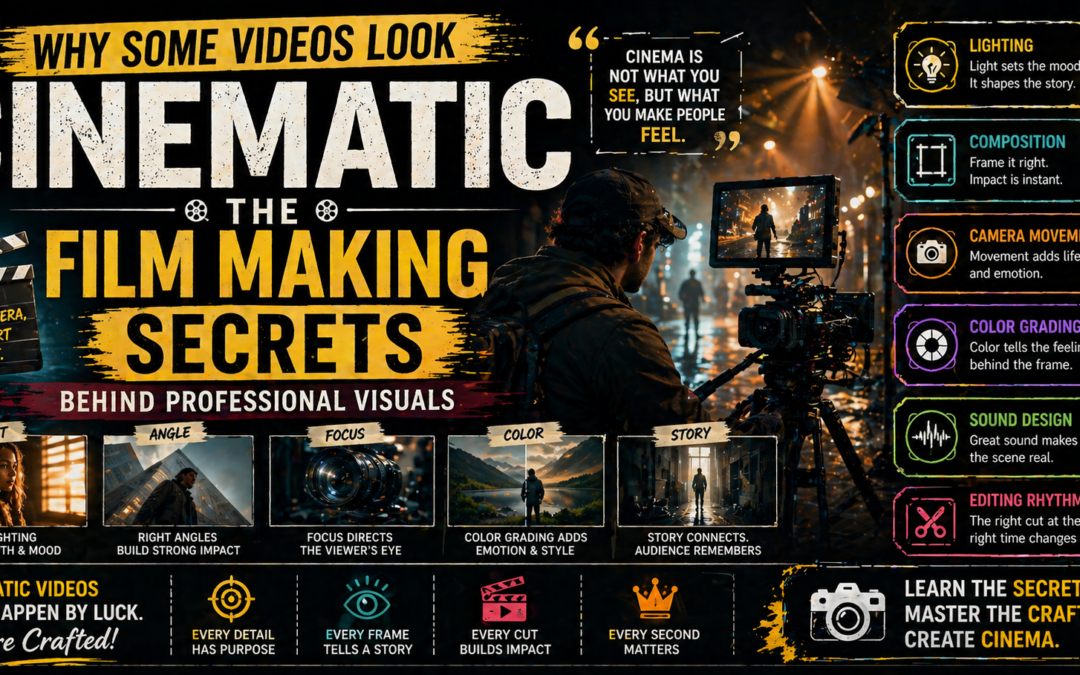
Why Some Videos Look Cinematic: The Filmmaking Secrets Behind Professional Visuals
Introduction
Have you ever watched a video and instantly felt it looked expensive, emotional, or professional? Even without knowing why, some videos feel more powerful than others. That premium look is usually the result of smart techniques known as Film Making Secrets.
Cinematic videos are not only created with expensive cameras. In reality, many professional visuals come from lighting, composition, movement, sound, and storytelling. A creator with the right skills can make simple equipment look amazing.
Today, cinematic style is used everywhere—from advertisements and YouTube content to wedding films, brand campaigns, and short movies.
In this blog, we will explore why some videos look cinematic and reveal the most important Film Making Secrets behind professional visuals.
What Are Film Making Secrets?
Film Making Secrets are creative and technical techniques used to make videos feel polished, emotional, and visually powerful.
These often include:
- lighting control
- camera framing
- lens choice
- camera movement
- color grading
- sound design
- editing rhythm
When combined correctly, these elements transform ordinary footage into cinematic content.
Lighting Is One of the Biggest Film Making Secrets
Lighting changes everything.
A simple room can look dramatic, luxurious, warm, or mysterious depending on light placement.
Professionals focus on:
- direction of light
- softness or hardness
- shadows
- contrast
- color temperature
Even basic lighting can dramatically improve visuals.
This is why lighting is one of the most important Film Making Secrets.
Composition Creates a Premium Look
Composition means how elements are arranged inside the frame.
Strong composition uses:
- rule of thirds
- symmetry
- leading lines
- foreground and background depth
- clean framing
Good composition guides the viewer’s eye and makes scenes feel intentional.
That is why composition is among the timeless Film Making Secrets used in cinema.
Camera Movement Adds Emotion
Static shots can work well, but movement adds energy and feeling.
Popular movements include:
- slow push-in
- pan shots
- tracking shots
- handheld realism
- smooth gimbal motion
Movement should match the emotion of the scene.
Purposeful motion is one of the smartest Film Making Secrets behind professional visuals.
Lens Choice Changes the Feeling
Different lenses create different moods.
For example:
- wide lenses feel immersive
- telephoto lenses compress space
- prime lenses create shallow depth of field
Many creators ignore this, but lens selection strongly affects cinematic quality.
Understanding lenses is one of the practical Film Making Secrets every creator should learn.
Depth of Field Makes Videos Look Cinematic
Blurred backgrounds often make subjects stand out beautifully.
This effect is called shallow depth of field.
It helps by:
- separating subject from background
- reducing distractions
- creating a premium feel
Used correctly, it becomes one of the visual Film Making Secrets audiences instantly notice.
Color Grading Creates Mood
Raw footage often looks flat.
Color grading transforms visuals into specific moods such as:
- warm and nostalgic
- cold and dramatic
- vibrant and energetic
- dark and cinematic
Professionals use tools like DaVinci Resolve, Adobe Premiere Pro, and Final Cut Pro.
Color grading remains one of the most powerful Film Making Secrets.
Sound Design Is Often Ignored
Many beginners focus only on visuals, but sound is equally important.
Professional videos use:
- ambient sound
- footsteps
- transitions
- music
- voice clarity
Good sound makes visuals feel bigger and more emotional.
This hidden layer is one of the most underrated Film Making Secrets.
Editing Rhythm Keeps Viewers Engaged
Editing is not just cutting clips.
Great editors control pacing.
They know when to:
- slow down for emotion
- speed up for energy
- cut on action
- sync with music
Strong pacing makes videos feel professional.
That is why editing rhythm is one of the key Film Making Secrets behind viewer engagement.
Storytelling Matters More Than Gear
Many people think expensive gear creates cinematic videos.
But weak storytelling with expensive gear still feels empty.
Strong videos usually have:
- clear emotion
- beginning, middle, end
- relatable message
- purpose
Storytelling is one of the deepest Film Making Secrets because people remember feelings more than camera specs.
Why Smartphones Can Look Cinematic Too
Modern phones can create amazing visuals when used correctly.
With good:
- lighting
- framing
- movement
- editing
- sound
even phones can produce premium content.
This proves many Film Making Secrets are based on skill, not budget.
Common Mistakes That Ruin Cinematic Quality
Many videos fail because of:
- poor lighting
- shaky footage
- cluttered backgrounds
- bad audio
- random editing
- no clear story
Avoiding these mistakes is just as important as learning Film Making Secrets.
Why Brands Use Cinematic Videos
Businesses increasingly use cinematic content for:
- ads
- product launches
- brand storytelling
- social media campaigns
Cinematic visuals create trust and premium perception.
That is why Film Making Secrets are valuable beyond movies.
Skills Students Should Learn
Students interested in filmmaking should focus on:
- storytelling
- lighting basics
- editing
- camera language
- sound design
- creativity
Tools help, but understanding Film Making Secrets builds long-term success.
Future of Film Making Secrets
The industry is evolving with:
- AI editing tools
- virtual production
- smartphone cinema
- short-form storytelling
- real-time color workflows
But even with new technology, core Film Making Secrets like story, light, and emotion will always matter.
Final Thoughts
Some videos look cinematic because they are carefully crafted using light, framing, movement, sound, and story.
These Film Making Secrets help creators turn ordinary footage into powerful experiences.
Whether you are a student, creator, or business owner, learning these principles can dramatically improve your videos.
Cinematic quality is not magic—it is intentional design.
Recent Comments