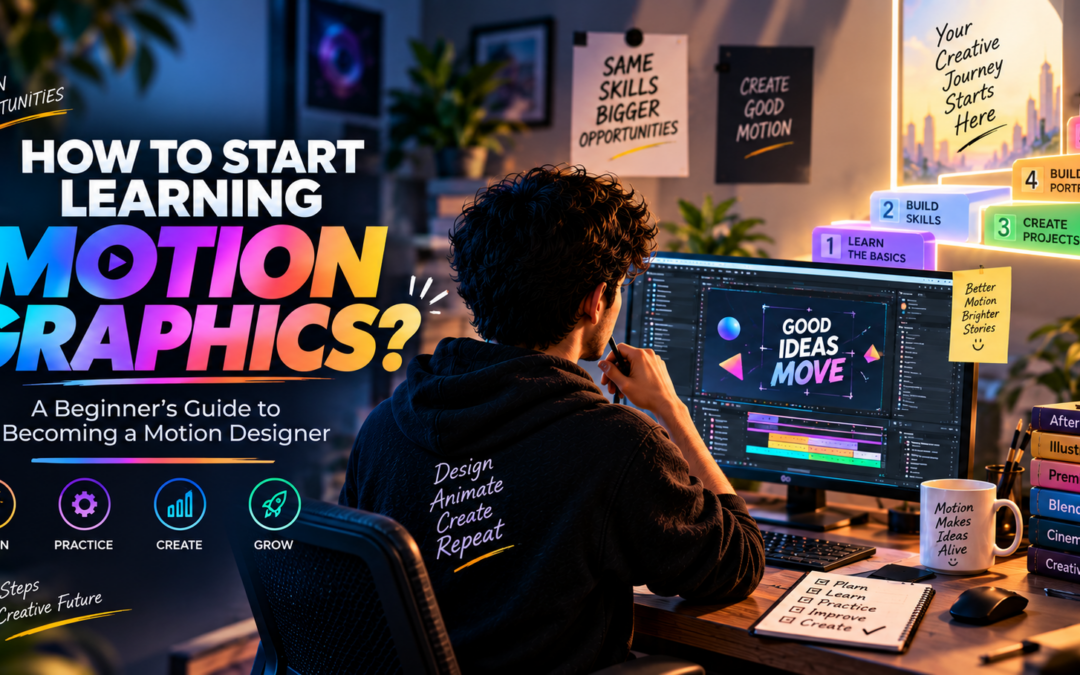
How to Start Learning Motion Graphics? A Beginner’s Roadmap to Becoming a Motion Designer
Introduction
Motion Graphics has become one of the most exciting and in-demand creative skills in the digital world. From YouTube intros and social media advertisements to brand campaigns and explainer videos, motion graphics is everywhere. Businesses, startups, content creators, and media companies use motion graphics to communicate ideas, promote products, and engage audiences more effectively.
As video content continues to dominate digital platforms, the demand for skilled Motion Graphics Designers is growing rapidly. This has led many students and creative enthusiasts to ask an important question: How to Start Learning Motion Graphics?
The good news is that learning motion graphics is more accessible than ever before. With the right roadmap, consistent practice, and a willingness to learn, anyone can develop the skills needed to build a successful career in motion design.
Whether you are a student, graphic designer, video editor, or complete beginner, understanding How to Start Learning Motion Graphics can help you begin your creative journey with confidence.
In this comprehensive guide, we’ll explore the skills, software, learning path, portfolio-building strategies, and career opportunities that can help you become a professional Motion Graphics Designer.
What Is Motion Graphics?
Before understanding How to Start Learning Motion Graphics, it’s important to understand what motion graphics actually is.
Motion Graphics is the process of bringing graphic design elements to life through movement and animation.
It combines:
- Graphic Design
- Animation
- Typography
- Visual Communication
- Storytelling
- Video Production
Motion Graphics Designers animate:
- Text
- Logos
- Icons
- Shapes
- Illustrations
- Infographics
- User Interface Elements
The goal is to communicate information in a visually engaging and easy-to-understand manner.
Unlike traditional character animation, motion graphics focuses more on design and communication than storytelling through characters.
Why Learn Motion Graphics?
One of the reasons many students search for How to Start Learning Motion Graphics is because of the growing demand for motion design skills.
Motion Graphics is used across numerous industries, including:
- Advertising
- Digital Marketing
- Social Media
- Entertainment
- Education
- Corporate Communications
- Technology
Learning Motion Graphics can open doors to exciting creative careers while allowing you to work on a wide variety of projects.
Benefits of learning Motion Graphics include:
- High Industry Demand
- Creative Career Opportunities
- Freelancing Potential
- Remote Work Options
- Strong Portfolio Development
- Continuous Learning Opportunities
As businesses continue investing in video content, Motion Graphics Designers will remain highly valuable professionals.
Step 1: Learn Graphic Design Fundamentals
The first step in understanding How to Start Learning Motion Graphics is building a strong design foundation.
Many beginners make the mistake of jumping directly into animation software without understanding design principles.
Motion Graphics is built upon graphic design.
Important design concepts include:
Typography
Typography involves choosing and arranging text effectively.
Motion Graphics frequently uses animated text, making typography a critical skill.
Color Theory
Understanding color relationships helps create visually appealing content.
Colors influence emotions, brand perception, and audience engagement.
Composition
Composition refers to how visual elements are arranged within a frame.
Good composition helps guide viewer attention.
Visual Hierarchy
Visual hierarchy determines what viewers notice first and how information is processed.
Strong design fundamentals make motion graphics more effective and professional.
Step 2: Understand Animation Principles
The next step in How to Start Learning Motion Graphics is mastering animation fundamentals.
Animation principles help make motion feel smooth, natural, and engaging.
Key principles include:
Timing
Controls how long animations take to complete.
Easing
Creates natural acceleration and deceleration.
Anticipation
Prepares viewers for upcoming actions.
Follow Through
Adds realism by allowing movement to continue naturally.
Staging
Ensures important information remains clear and visible.
Rhythm and Pacing
Controls the flow and speed of visual information.
Learning these principles significantly improves animation quality.
Step 3: Learn Adobe After Effects
When discussing How to Start Learning Motion Graphics, Adobe After Effects is often the first software recommendation.
After Effects is considered the industry-standard motion graphics application.
It allows designers to create:
- Text Animations
- Logo Animations
- Explainer Videos
- Visual Effects
- Social Media Content
- Promotional Videos
Beginners should focus on learning:
- Keyframes
- Position Animation
- Scale Animation
- Opacity Controls
- Masks
- Shape Layers
- Motion Blur
Mastering After Effects provides a strong foundation for professional motion design work.
Step 4: Learn Supporting Software
While After Effects is essential, professional Motion Graphics Designers often use multiple tools.
Adobe Illustrator
Used to create vector graphics and design assets.
Useful for image editing and visual asset creation.
Used for video editing and final project assembly.
A powerful free tool for 3D motion graphics.
Cinema 4D
Widely used for professional 3D motion design projects.
Learning supporting software expands your creative capabilities and career opportunities.
Step 5: Practice Simple Projects
The best answer to How to Start Learning Motion Graphics is simple: practice consistently.
Begin with small projects such as:
- Animated Titles
- Logo Reveals
- Social Media Posts
- Loading Animations
- Kinetic Typography
- Lower Thirds
Simple projects help build confidence while reinforcing foundational skills.
Focus on learning rather than creating perfect work.
Every project teaches valuable lessons.
Step 6: Study Professional Work
One of the fastest ways to improve is by studying professional motion graphics projects.
Observe content from:
- Advertisements
- Brand Campaigns
- Explainer Videos
- Product Launch Videos
- Television Graphics
Pay attention to:
- Timing
- Color Usage
- Typography
- Transitions
- Storytelling
- Visual Hierarchy
Analyzing professional work helps you understand industry standards and creative techniques.
Step 7: Learn Storytelling Through Motion
Motion Graphics is not simply about making things move.
Every animation should communicate a message.
Storytelling helps:
- Improve Engagement
- Strengthen Communication
- Create Emotional Connections
- Guide Viewer Attention
Understanding storytelling principles is an important part of How to Start Learning Motion Graphics.
Effective motion designers think about communication before animation.
Step 8: Build a Strong Portfolio
A portfolio is one of the most important tools for career growth.
Employers and clients often evaluate portfolios before reviewing resumes.
Your portfolio should include:
- Logo Animations
- Promotional Videos
- Typography Projects
- Social Media Content
- Explainer Videos
- Personal Creative Projects
Quality is more important than quantity.
A few excellent projects are better than many average ones.
Step 9: Learn 3D Motion Graphics
As your skills improve, consider exploring 3D motion design.
3D Motion Graphics is becoming increasingly popular in:
- Advertising
- Product Visualization
- Entertainment
- Brand Campaigns
- Digital Experiences
Learning tools like Blender and Cinema 4D can significantly enhance your portfolio.
Many companies actively seek designers with 3D motion graphics skills.
Common Mistakes Beginners Should Avoid
When learning How to Start Learning Motion Graphics, beginners often make several mistakes.
Focusing Only on Software
Software is important, but design fundamentals matter more.
Using Too Many Effects
Excessive effects can distract from the message.
Ignoring Typography
Poor typography reduces professionalism.
Skipping Animation Principles
Fundamentals are essential for creating natural motion.
Lack of Practice
Consistent practice is the fastest path to improvement.
Avoiding these mistakes will accelerate your learning process.
Career Opportunities in Motion Graphics
Motion Graphics offers a wide range of career opportunities.
Popular roles include:
Motion Graphics Designer
Creates animated visual content for brands and businesses.
Motion Designer
Develops motion systems and animations for digital platforms.
Video Editor
Combines editing and motion graphics skills.
Broadcast Designer
Creates television graphics and media content.
Content Creator
Produces engaging digital content for audiences.
Visual Designer
Combines graphic design and motion design expertise.
These careers are available across multiple industries and offer strong growth potential.
Future of Motion Graphics
The future of Motion Graphics continues to evolve rapidly.
Emerging trends include:
- AI-Assisted Motion Design
- Real-Time Animation
- Interactive Motion Graphics
- Augmented Reality
- Virtual Reality
- 3D Motion Design
- Virtual Production
As technology advances, new opportunities will continue to emerge for Motion Graphics professionals.
Those who continuously learn and adapt will remain highly competitive.
How Long Does It Take to Learn Motion Graphics?
A common question related to How to Start Learning Motion Graphics is how long the learning process takes.
The answer depends on your dedication and practice.
General timeline:
- 1–3 Months: Basic Software Skills
- 3–6 Months: Intermediate Projects
- 6–12 Months: Portfolio Development
- 1–2 Years: Professional-Level Skills
Consistency matters more than speed.
Even spending one hour per day can lead to significant progress over time.
Why Motion Graphics Is a Great Career Choice
Motion Graphics combines:
- Creativity
- Technology
- Storytelling
- Design
- Problem-Solving
It offers opportunities to work on exciting projects across industries while continuously learning new skills.
For students who enjoy visual creativity and digital media, motion graphics provides a rewarding and future-focused career path.
Final Thoughts
If you’re wondering How to Start Learning Motion Graphics, the journey begins with understanding design fundamentals, learning animation principles, mastering industry-standard software, and practicing consistently. Motion Graphics is a skill that blends creativity, communication, and technology to create engaging visual experiences.
The demand for Motion Graphics Designers continues to grow as businesses increasingly rely on video content and digital storytelling. By building strong design skills, learning tools like Adobe After Effects, developing a professional portfolio, and staying updated with industry trends, aspiring designers can create exciting career opportunities for themselves.
Whether your goal is to work in advertising, entertainment, digital marketing, social media, or freelance design, learning motion graphics can open the door to a creative and rewarding future. The best time to start learning Motion Graphics is now. Every project, every animation, and every new skill brings you one step closer to becoming a successful Motion Designer.
Recent Comments