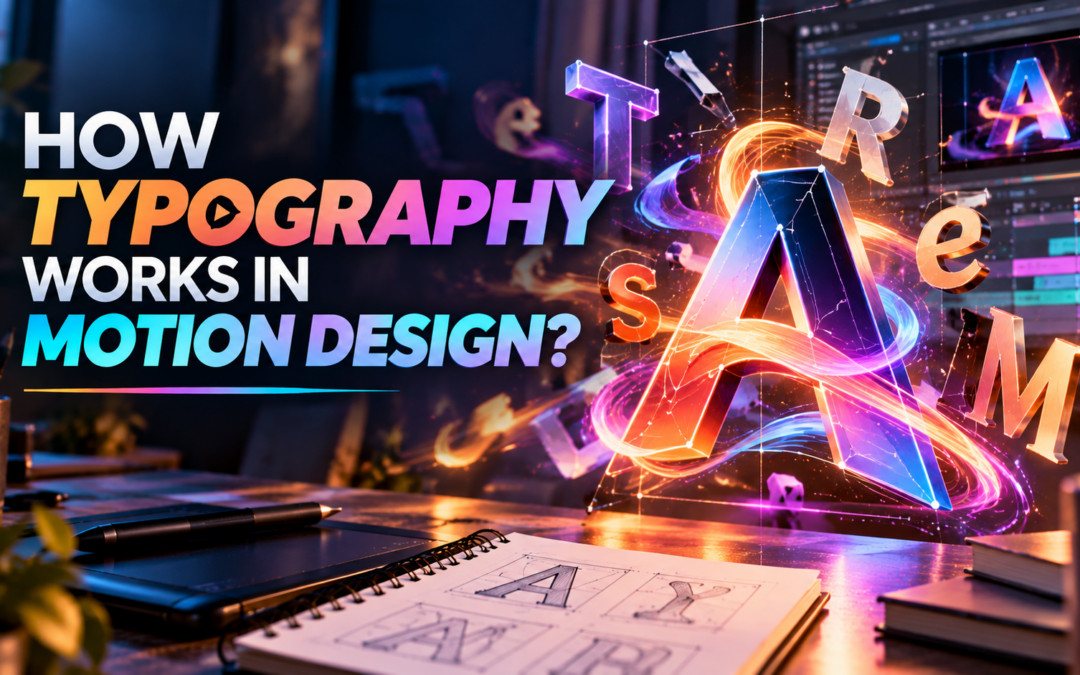
How Typography Works in Motion Design: Bringing Words to Life Through Motion
Introduction
Typography is one of the most powerful tools in visual communication. It helps designers present information clearly, establish hierarchy, express emotions, and strengthen brand identity. While typography is essential in graphic design, it becomes even more impactful when combined with movement.
This is where Typography in Motion Design plays a vital role. By animating text and combining it with timing, transitions, and visual storytelling, motion designers can transform ordinary words into engaging visual experiences. Whether it is a social media advertisement, an explainer video, a brand campaign, or a title sequence, animated typography helps capture attention and communicate messages more effectively.
In today’s digital world, audiences consume large amounts of video content every day. As a result, Typography in Motion Design has become one of the most important skills for Motion Graphics Designers, Video Editors, and Digital Content Creators.
In this blog, we’ll explore what typography in motion design is, why it matters, how it is used across industries, and the principles that help designers create impactful animated text.
What Is Typography in Motion Design?
Before understanding how Typography in Motion Design works, it is important to understand typography itself.
Typography is the art of arranging text to make written language clear, readable, and visually appealing.
It involves:
- Font Selection
- Text Hierarchy
- Spacing
- Alignment
- Composition
When typography is combined with animation, it becomes Motion Typography or Animated Typography.
This allows designers to add movement, timing, and visual energy to text, making communication more engaging and memorable.
Why Typography Is Important in Motion Design
Text is often the primary way information is communicated in digital content.
Typography in Motion Design helps:
- Capture Attention
- Improve Readability
- Guide Viewer Focus
- Strengthen Storytelling
- Enhance Branding
- Increase Audience Engagement
Instead of simply displaying text on screen, motion designers use animation to give meaning and emphasis to words.
This creates a more immersive viewing experience.
How Typography Captures Attention
One of the biggest advantages of Typography in Motion Design is its ability to attract attention quickly.
In social media, viewers often decide within seconds whether to continue watching content.
Animated text helps stop users from scrolling by introducing:
- Dynamic Movement
- Creative Transitions
- Visual Contrast
- Eye-Catching Effects
Motion naturally attracts the human eye, making animated typography more noticeable than static text.
Creating Visual Hierarchy Through Motion
Visual hierarchy helps viewers understand information in the correct order.
Motion designers use typography to emphasize key messages.
This can be achieved through:
- Size Changes
- Positioning
- Timing
- Color Contrast
- Animation Speed
Important words may appear first, move differently, or remain on screen longer.
This helps viewers focus on the most critical information.
Typography as a Storytelling Tool
Storytelling is one of the most powerful aspects of Motion Design.
Typography in Motion Design allows text to become part of the narrative rather than simply displaying information.
For example:
- Fast-moving text can create excitement.
- Smooth transitions can create elegance.
- Bold animated words can emphasize important messages.
Motion helps text communicate emotion and personality.
This makes storytelling more engaging and memorable.
Kinetic Typography: Bringing Text to Life
Kinetic Typography is one of the most popular applications of Typography in Motion Design.
Kinetic Typography refers to animated text that moves dynamically to communicate ideas.
It is commonly used in:
- Advertisements
- Social Media Videos
- Music Videos
- Explainer Videos
- Promotional Content
Kinetic Typography transforms ordinary text into visual storytelling.
By synchronizing text with sound and movement, designers create highly engaging experiences.
Strengthening Brand Identity Through Typography
Typography is a key component of branding.
Many companies use specific fonts, colors, and visual styles to establish a unique identity.
Typography in Motion Design helps brands maintain consistency across:
- Advertisements
- Social Media Content
- Websites
- Promotional Videos
Animated typography reinforces brand recognition while creating a more professional appearance.
Improving Communication and Information Retention
Research consistently shows that visual content is easier to remember than plain text.
Motion Typography helps audiences:
- Understand Information Faster
- Retain Key Messages Longer
- Stay Engaged Throughout Videos
When text appears with purposeful movement, viewers are more likely to remember the message being communicated.
This makes Motion Typography an effective communication tool.
Common Typography Animation Techniques
Motion designers use several techniques to animate text effectively.
Fade In and Fade Out
Simple transitions that create smooth text appearances.
Slide Animation
Text enters from different directions.
Scale Animation
Words grow or shrink to create emphasis.
Rotation Effects
Text rotates to create dynamic movement.
Mask Reveals
Text appears through creative masking techniques.
Character Animation
Individual letters animate independently.
These techniques help make typography more engaging and visually appealing.
Typography in Social Media Content
One of the most common uses of Typography in Motion Design is social media content creation.
Animated text helps:
- Highlight Key Messages
- Improve Accessibility
- Increase Engagement
- Support Branding
Platforms such as Instagram, YouTube, LinkedIn, and Facebook frequently feature motion typography in videos and advertisements.
Typography in Advertising
Advertising relies heavily on communication.
Motion Typography helps advertisers:
- Deliver Messages Quickly
- Emphasize Product Benefits
- Create Emotional Connections
- Strengthen Brand Recall
Many successful advertising campaigns use animated text to capture attention and improve message retention.
Typography in Explainer Videos
Explainer videos often present complex information.
Motion Typography simplifies communication by:
- Highlighting Important Points
- Supporting Visual Explanations
- Improving Viewer Understanding
Animated text helps audiences absorb information more efficiently.
Principles for Effective Typography in Motion Design
To create successful Motion Typography, designers should follow several principles.
Prioritize Readability
Text should always be easy to read.
Keep Animations Purposeful
Every movement should support communication.
Maintain Consistency
Use consistent typography styles throughout a project.
Control Timing
Text should remain visible long enough to be read comfortably.
Avoid Excessive Effects
Overusing effects can distract viewers from the message.
Following these principles helps create professional-quality work.
Software Used for Typography in Motion Design
Professional Motion Designers use various tools to create animated typography.
Popular software includes:
- Adobe After Effects
- Adobe Premiere Pro
- Adobe Illustrator
- Cinema 4D
- Blender
Among these, Adobe After Effects remains the industry standard for Motion Typography.
Skills Needed to Master Typography in Motion Design
Professionals working with Typography in Motion Design often develop skills such as:
- Graphic Design
- Typography Fundamentals
- Animation Principles
- Visual Storytelling
- Motion Graphics
- Video Editing
Combining these skills allows designers to create compelling visual communication.
Career Opportunities
As video content continues to dominate digital platforms, demand for Motion Typography skills is growing.
Career opportunities include:
- Motion Graphics Designer
- Motion Designer
- Video Editor
- Advertising Designer
- Content Creator
- Brand Designer
Typography animation skills are highly valued across creative industries.
Future of Typography in Motion Design
The future of Typography in Motion Design continues to evolve with technology.
Emerging trends include:
- AI-Assisted Typography Animation
- Interactive Typography
- 3D Text Animation
- Immersive Digital Experiences
- Real-Time Motion Design
As digital content becomes more dynamic, animated typography will remain an essential creative tool.
Final Thoughts
Typography in Motion Design is far more than moving text across a screen. It is a powerful communication tool that helps designers capture attention, strengthen storytelling, improve branding, and create engaging visual experiences. By combining typography with animation, motion designers transform words into dynamic elements that communicate ideas with greater impact.
From social media content and advertisements to explainer videos and brand campaigns, typography plays a crucial role in modern motion design. For students and aspiring Motion Graphics Designers, mastering typography animation is an important step toward building professional skills and creating compelling visual content.
As video content continues to grow across digital platforms, the importance of Typography in Motion Design will only continue to increase, making it one of the most valuable skills in the creative industry today.
Recent Comments