
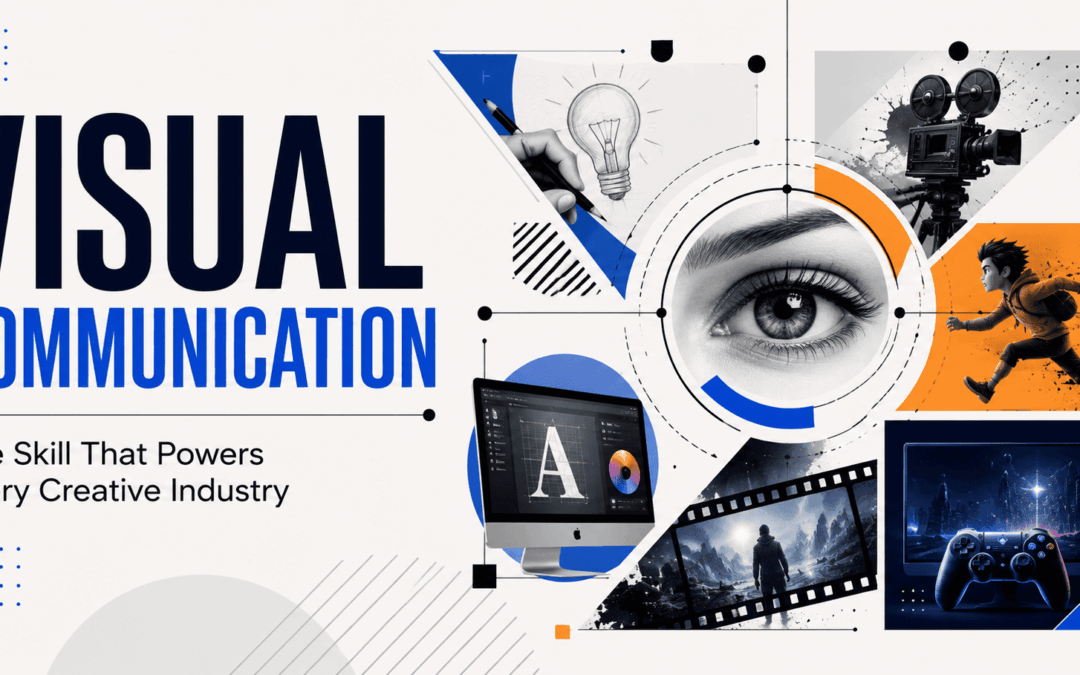
What Is Visual Communication and Why Is It One of the Most Powerful Skills in the Creative Industry?
Introduction
In today’s digital-first world, visuals have become one of the most powerful ways to communicate ideas, emotions, and information. Whether it’s a movie poster, a social media campaign, a game interface, or an animated film, visuals influence how people think, feel, and respond.
This is where Visual Communication in the Creative Industry plays a crucial role.
From Animation and VFX to Graphic Design, Gaming, Film Making, and Digital Content Creation, creative professionals rely on visual communication to connect with audiences and deliver meaningful experiences. A well-crafted visual can explain complex ideas, tell compelling stories, and create lasting impressions far more quickly than text alone.
As creative industries continue to expand, understanding Visual Communication in the Creative Industry has become an essential skill for students and professionals alike.
What Is Visual Communication in the Creative Industry?
Visual Communication in the Creative Industry refers to the process of conveying information, emotions, and messages through visual elements rather than relying solely on words.
These visual elements include:
- Images
- Illustrations
- Typography
- Color
- Layout
- Motion Graphics
- Videos
- Animations
- Icons
The goal is to communicate ideas clearly, creatively, and effectively.
In creative industries, visual communication helps transform concepts into engaging experiences that audiences can quickly understand and remember.
Why Is Visual Communication in the Creative Industry Important?
Modern audiences consume content at an incredible speed.
People scroll through social media feeds, watch short-form videos, browse websites, and engage with digital experiences every day. In such a fast-paced environment, capturing attention has become increasingly challenging.
This is why Visual Communication in the Creative Industry is so important.
It helps:
- Simplify complex information
- Improve audience engagement
- Strengthen storytelling
- Build brand recognition
- Enhance user experiences
- Create emotional connections
Without effective visual communication, even great ideas may struggle to reach their audience.
How Visual Communication Shapes Everyday Experiences
Most people encounter visual communication hundreds of times each day.
Examples include:
Images, reels, and graphics help creators communicate messages instantly.
Advertising
Brands use visual communication to attract attention and influence purchasing decisions.
Websites and Apps
Effective visual design improves usability and navigation.
Films and Streaming Content
Visual storytelling helps audiences connect with characters and narratives.
Video Games
Design elements guide player experiences and improve immersion.
These examples highlight the growing importance of Visual Communication in the Creative Industry.
The Key Elements of Visual Communication
Successful communication relies on several essential visual components.
Color
Colors influence mood, perception, and emotional response.
Typography
Typography affects readability and helps establish personality and tone.
Images
Images communicate ideas quickly and often leave a stronger impression than text.
Layout
A well-organized layout improves clarity and user experience.
Contrast
Contrast helps important information stand out and guide audience attention.
Together, these elements form the foundation of effective Visual Communication in the Creative Industry.
Visual Communication and Storytelling
Storytelling is one of the most powerful applications of visual communication.
Creative professionals use visuals to guide audiences through narratives, emotions, and experiences.
Visual storytelling is widely used in:
- Animation
- Films
- Advertisements
- Video Games
- Social Media Content
- Motion Graphics
The ability to tell stories visually is one of the reasons Visual Communication in the Creative Industry remains such a valuable skill.
Visual Communication in Animation
Animation is built on visual storytelling.
Animators use movement, expressions, color, and composition to communicate ideas and emotions.
Through Visual Communication in the Creative Industry, animators can:
- Express character emotions
- Advance narratives
- Build immersive worlds
- Create memorable experiences
A character’s body language alone can often communicate more than dialogue.
Visual Communication in Graphic Design
Graphic designers solve communication challenges using visuals.
Their work can be found in:
- Branding
- Marketing Campaigns
- Packaging Design
- Social Media Graphics
- Print Media
The objective is not simply to create attractive designs but to communicate messages effectively.
This makes Visual Communication in the Creative Industry a fundamental skill for graphic designers.
Visual Communication in VFX and Film Making
Visual effects artists and filmmakers use visual communication to create believable and engaging experiences.
Through:
- Cinematography
- Lighting
- Composition
- Visual Effects
- Color Grading
they influence how audiences interpret scenes and emotions.
Every creative decision contributes to the effectiveness of Visual Communication in the Creative Industry.
Visual Communication in Game Design
Game designers rely on visuals to guide player interactions.
Examples include:
- User Interface Design
- Character Design
- Environment Design
- Visual Feedback Systems
- Navigation Elements
Good visual communication helps players understand objectives, mechanics, and environments quickly and efficiently.
Visual Communication in Digital Media and Content Creation
Content creators compete for attention in a crowded digital landscape.
Successful creators use:
- Strong Thumbnails
- Engaging Visuals
- Creative Editing
- Consistent Branding
- Effective Storytelling
These elements help improve audience engagement and content performance.
This is another example of how Visual Communication in the Creative Industry drives success in modern media.
Why Visual Communication Influences Human Behavior
Humans process visuals much faster than text.
As a result, visuals often influence:
- First Impressions
- Decision-Making
- Emotional Responses
- Brand Perception
- Information Retention
Strong visual communication helps audiences understand messages more effectively and remember them longer.
Common Mistakes in Visual Communication
Many beginners focus only on aesthetics rather than communication.
Common mistakes include:
Overcrowded Designs
Too much information can confuse audiences.
Poor Color Choices
Colors that conflict with the message can weaken communication.
Weak Hierarchy
Important information becomes difficult to identify.
Inconsistent Branding
Inconsistent visuals reduce recognition and trust.
Ignoring Audience Needs
Effective communication always considers the target audience.
Avoiding these mistakes is essential for successful Visual Communication in the Creative Industry.
Essential Skills for Creative Professionals
Students pursuing creative careers should develop skills such as:
Creativity
Generating innovative ideas and solutions.
Observation
Understanding how audiences respond to visuals.
Storytelling
Using visuals to communicate compelling narratives.
Design Thinking
Solving communication challenges through design.
Technical Skills
Mastering industry-standard creative tools.
These abilities help professionals excel in Visual Communication in the Creative Industry.
Career Opportunities That Depend on Visual Communication
A strong understanding of visual communication can open doors to a wide range of creative careers.
Popular roles include:
- Graphic Designer
- Animator
- Motion Graphics Designer
- VFX Artist
- UI/UX Designer
- Game Artist
- Content Creator
- Art Director
- Creative Director
As businesses and brands continue to invest in digital experiences, demand for professionals skilled in Visual Communication in the Creative Industry continues to grow.
Why Students Should Learn Visual Communication
Students interested in creative fields can benefit significantly from learning visual communication.
It helps them:
- Express ideas effectively
- Build strong portfolios
- Improve storytelling skills
- Understand audience psychology
- Develop industry-relevant expertise
Regardless of whether a student chooses Animation, VFX, Gaming, Graphic Design, or Digital Media, visual communication remains a valuable long-term skill.
The Future of Visual Communication in the Creative Industry
Emerging technologies are creating exciting new opportunities for visual communication.
These include:
- Artificial Intelligence
- Virtual Reality
- Augmented Reality
- Virtual Production
- Interactive Media
- Immersive Experiences
As technology evolves, Visual Communication in the Creative Industry will continue to play a central role in how people learn, communicate, and engage with digital content.
Final Thoughts
In an increasingly visual world, the ability to communicate through images, design, motion, and storytelling has become one of the most valuable skills a creative professional can possess.
Visual Communication in the Creative Industry helps transform ideas into experiences, strengthen connections with audiences, and create meaningful impact across Animation, VFX, Gaming, Graphic Design, Film Making, and Digital Media.
For students exploring creative careers, mastering visual communication is more than learning a technical skill—it is learning how to inspire, inform, and influence audiences through the power of visual storytelling.
Recent Comments