
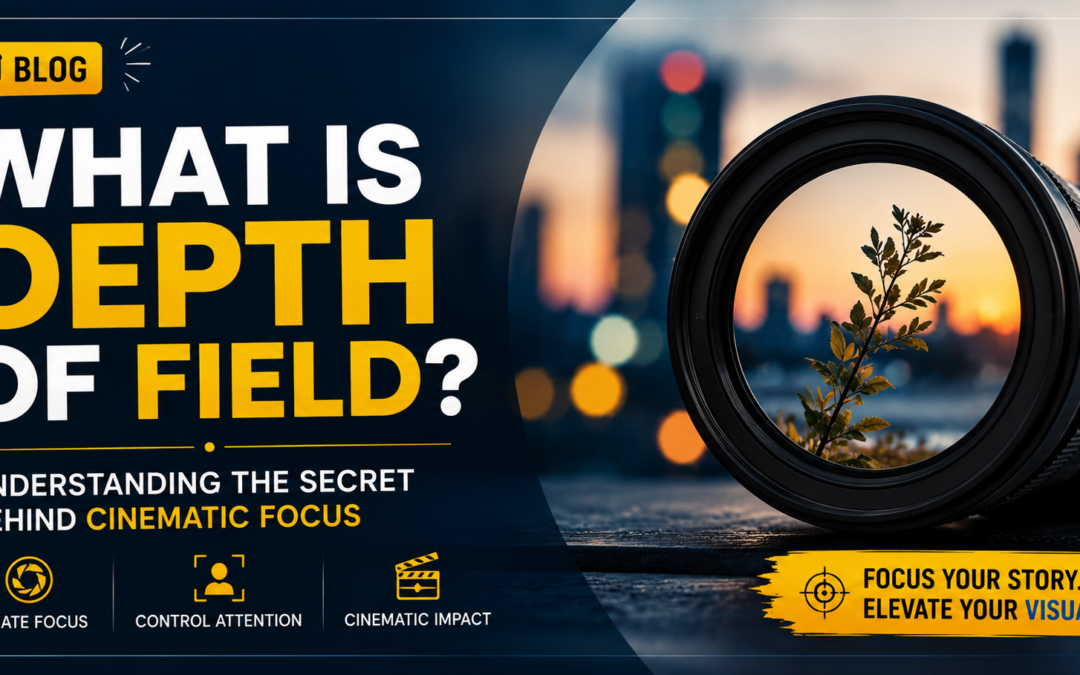
What Is Depth of Field in Filmmaking? Understanding the Secret Behind Cinematic Focus in Photography & Filmmaking
Introduction
Have you ever watched a movie scene where the main character appears perfectly sharp while the background becomes beautifully blurred? Or noticed a professional portrait photograph where the subject stands out clearly while everything behind them fades into a soft blur? This visual effect is one of the most powerful storytelling tools in photography and filmmaking, known as Depth of Field in Filmmaking.
Depth of field helps filmmakers and photographers guide audience attention, create mood, add visual depth, and make scenes feel more cinematic. It is one of the fundamental concepts that separates ordinary visuals from professional-looking images.
Whether you are a photographer, filmmaker, content creator, or student learning visual production, understanding depth of field is essential. It affects how viewers experience a scene and helps communicate emotions more effectively.
In this blog, we will explore what depth of field is, how it works, what factors affect it, and why it is so important in photography and filmmaking.
What Is Depth of Field in Filmmaking?
Depth of Field in Filmmaking refers to the area of an image that appears sharp and in focus.
Some parts of a scene may look sharp while other areas appear blurred.
Depth of field determines how much of the image remains in focus from the foreground to the background.
There are generally two main types:
- Shallow Depth of Field
- Deep Depth of Field
Understanding the difference between these two forms the foundation of learning depth of field.
Why Depth of Field Matters
Depth of field is much more than a camera setting.
It influences:
- visual storytelling
- audience attention
- emotional impact
- cinematic quality
- subject emphasis
Filmmakers use Depth of Field in Filmmaking to tell stories visually without using words.
A well-controlled depth of field can completely change how viewers experience a scene.
Shallow Depth of Field
Shallow depth of field means only a small part of the image is in focus.
The subject remains sharp while the background becomes blurred.
This technique is commonly used in:
- portrait photography
- interviews
- cinematic close-ups
- product photography
Benefits include:
- directing attention to the subject
- reducing distractions
- creating a professional look
- adding emotional focus
Many modern films use shallow depth of field extensively because it creates a cinematic appearance.
Deep Depth of Field
Deep depth of field keeps most of the scene in focus.
Foreground, middle ground, and background remain relatively sharp.
This style is often used in:
- landscape photography
- architecture photography
- nature documentaries
- wide cinematic shots
Deep focus allows viewers to explore multiple elements within the frame.
It provides a different storytelling experience compared to shallow focus.
How Depth of Field Works
Depth of field is influenced by how a camera lens focuses light.
When a lens focuses on a specific point, objects near that point appear sharp.
Objects farther away may gradually become blurry.
The amount of blur depends on several factors that control Depth of Field in Filmmaking.
Aperture and Depth of Field
Aperture is one of the biggest factors affecting depth of field.
Aperture controls how much light enters the camera.
A wide aperture creates:
- stronger background blur
- shallow depth of field
- cinematic portraits
A narrow aperture creates:
- more overall focus
- deep depth of field
- landscape-style images
Understanding aperture is essential for controlling depth of field creatively.
Lens Focal Length
Different lenses create different depth-of-field effects.
Longer lenses often produce:
- stronger background blur
- greater subject isolation
- cinematic portraits
Shorter lenses typically produce:
- wider views
- deeper focus
- more environmental detail
Lens selection plays a major role in Depth of Field in Filmmaking.
Subject Distance
The distance between the camera and subject also affects focus.
When the camera moves closer to a subject:
- background blur increases
- depth of field becomes shallower
When the camera moves farther away:
- more of the scene remains in focus
Many photographers use this principle to create cinematic portraits.
Sensor Size and Depth of Field
Camera sensor size influences depth of field as well.
Larger sensors generally create:
- shallower depth of field
- stronger background separation
- more cinematic visuals
This is one reason professional cinema cameras are often preferred in filmmaking.
Depth of Field in Photography
Photographers use depth of field to create visual impact.
Examples include:
Portrait Photography
The subject remains sharp while the background becomes blurred.
Wildlife Photography
Animals stand out from distracting backgrounds.
Product Photography
Products become the main focus of attention.
Street Photography
Selective focus helps guide viewers toward important details.
Depth of field helps transform ordinary photographs into visually compelling images.
Depth of Field in Filmmaking
Filmmakers use Depth of Field in Filmmaking to support storytelling.
Examples include:
Character Focus
Directing attention to a specific character.
Emotional Scenes
Creating intimacy through shallow focus.
Dramatic Reveals
Changing focus between subjects to reveal information.
Environmental Storytelling
Using deep focus to show surroundings and context.
Depth of field becomes a visual language in filmmaking.
Rack Focus: A Powerful Cinematic Technique
Rack focus is a popular filmmaking technique.
It shifts focus from one subject to another within the same shot.
For example:
- foreground character becomes blurry
- background character becomes sharp
This technique helps guide audience attention naturally.
Many professional films use rack focus for dramatic storytelling.
Common Beginner Mistakes
Many beginners struggle with depth of field because they:
- use incorrect aperture settings
- focus on the wrong subject
- overuse background blur
- ignore composition
- rely only on equipment
While equipment matters, understanding visual storytelling is even more important.
When to Use Shallow Depth of Field
Use shallow depth of field when:
- highlighting a subject
- creating emotional impact
- filming interviews
- shooting cinematic portraits
- isolating important details
This technique works best when viewer attention needs to remain focused.
When to Use Deep Depth of Field
Use deep depth of field when:
- showing large environments
- capturing landscapes
- emphasizing multiple subjects
- creating realism
- presenting detailed scenes
Deep focus allows audiences to explore the frame naturally.
Tools Used in Professional Production
Professional filmmakers often use tools such as:
- Adobe Premiere Pro
- DaVinci Resolve
- Adobe After Effects
These tools help enhance focus effects during post-production when needed.
However, capturing proper depth of field in-camera remains the preferred approach.
Why Depth of Field Creates a Cinematic Look
Many people associate blurred backgrounds with professional filmmaking.
This happens because depth of field:
- guides attention
- adds visual depth
- creates emotional connection
- enhances storytelling
- improves composition
Professional cinematographers carefully control focus to support the story.
This is why Depth of Field in Filmmaking remains one of the most important visual techniques.
Career Applications
Understanding depth of field benefits careers such as:
- cinematography
- filmmaking
- photography
- advertising
- content creation
- visual storytelling
- video production
It is a fundamental skill used across creative industries.
Final Thoughts
Depth of field is one of the most powerful tools in photography and filmmaking.
It allows creators to control what audiences see, feel, and focus on within a frame.
Whether creating cinematic portraits, emotional film scenes, or stunning visual content, understanding Depth of Field in Filmmaking helps transform ordinary visuals into professional storytelling experiences.
For aspiring photographers, filmmakers, and content creators, mastering depth of field is an essential step toward creating visually engaging and memorable work.
Because sometimes the difference between an ordinary shot and a cinematic masterpiece is simply where the focus lies.
Recent Comments