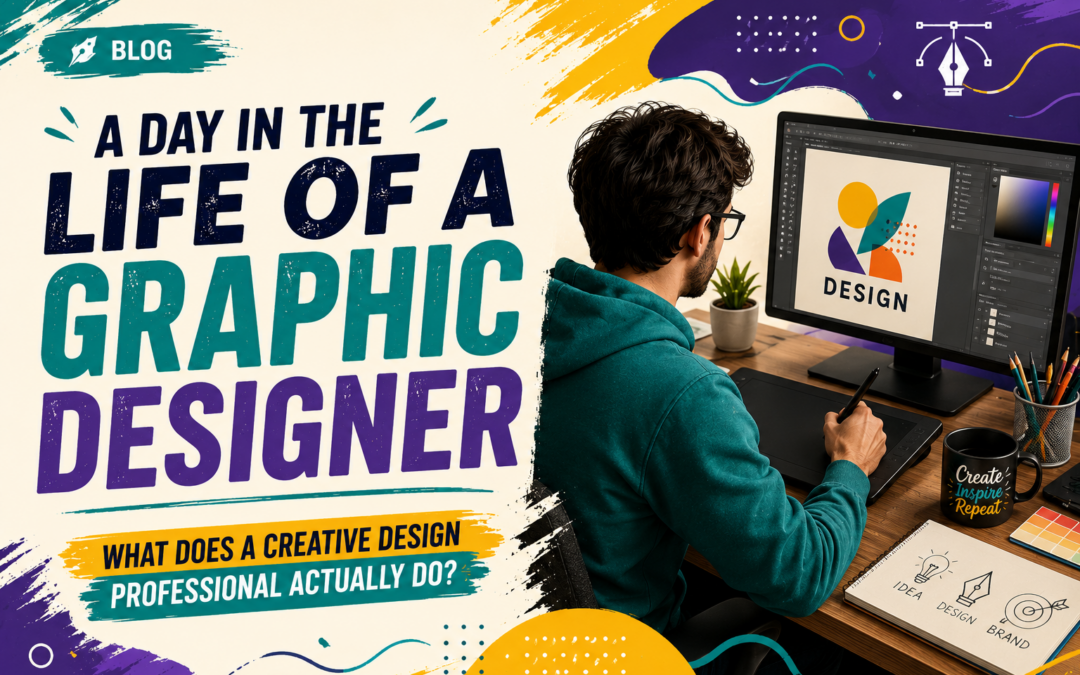
A Day in the Life of a Graphic Designer: What Does a Creative Design Professional Actually Do?
Introduction
Have you ever wondered who creates the logos, advertisements, social media posts, packaging designs, posters, brochures, and visual content that we see every day? Behind these creative visuals are Graphic Designers—professionals who use design, creativity, and communication to help brands connect with their audiences.
Graphic design plays a crucial role in marketing, branding, advertising, publishing, digital media, and business communication. Every successful brand relies on strong visual design to create recognition and leave a lasting impression.
Many students interested in creative careers often ask, “What does a Graphic Designer actually do every day?” Understanding a Day in the Life of a Graphic Designer provides valuable insight into the profession, daily responsibilities, industry expectations, and career opportunities.
In this blog, we’ll explore how graphic designers work, the projects they handle, the tools they use, and why graphic design continues to be one of the most in-demand creative careers.
Who Is a Graphic Designer?
Before exploring a Day in the Life of a Graphic Designer, it is important to understand the role itself.
A Graphic Designer is a visual communicator who creates designs that inform, engage, and inspire audiences.
Graphic Designers work on:
- Brand Identity
- Logos
- Social Media Creatives
- Marketing Campaigns
- Packaging Design
- Print Materials
- Digital Advertisements
- Website Graphics
Their goal is to communicate ideas effectively through visual elements.
Starting the Workday
A typical Day in the Life of a Graphic Designer often begins by reviewing project schedules and client requirements.
Most designers start their day by:
- Checking Emails
- Reviewing Design Briefs
- Prioritizing Tasks
- Planning Deliverables
- Attending Team Meetings
Professional designers often work on multiple projects simultaneously, making organization and time management essential.
Understanding Client Requirements
Before creating any design, Graphic Designers need to understand project objectives.
This stage involves reviewing:
- Brand Guidelines
- Target Audience
- Project Goals
- Marketing Objectives
- Design Preferences
Understanding client expectations helps ensure that designs communicate the intended message effectively.
This planning phase is a crucial part of a Day in the Life of a Graphic Designer.
Research and Creative Inspiration
Every successful design project begins with research.
Graphic Designers spend time exploring:
- Industry Trends
- Competitor Designs
- Visual References
- Color Palettes
- Typography Styles
Research helps generate creative ideas and ensures that designs remain relevant and visually appealing.
Many designers create mood boards before beginning the design process.
Creating Initial Design Concepts
After gathering inspiration, designers begin developing creative concepts.
This stage may involve:
- Sketching Ideas
- Creating Layouts
- Exploring Typography
- Testing Color Combinations
- Developing Visual Directions
The goal is to present strong design concepts that align with project objectives.
Concept development is one of the most exciting parts of a Day in the Life of a Graphic Designer.
Working on Branding Projects
Branding is one of the most important areas of graphic design.
Graphic Designers often create:
- Logos
- Brand Guidelines
- Business Cards
- Stationery
- Marketing Assets
Strong branding helps businesses establish recognition and build trust with customers.
Designers must ensure consistency across all brand materials.
Designing Social Media Creatives
Today, a significant portion of a Day in the Life of a Graphic Designer may involve creating content for social media platforms.
Common projects include:
- Instagram Posts
- Facebook Ads
- LinkedIn Creatives
- YouTube Thumbnails
- Story Graphics
- Promotional Banners
Social media design requires creativity, speed, and an understanding of audience engagement.
Creating Marketing Materials
Graphic Designers frequently develop marketing assets for businesses and organizations.
These may include:
- Posters
- Flyers
- Brochures
- Email Banners
- Digital Ads
- Event Promotions
Marketing designs must communicate messages clearly while maintaining strong visual appeal.
Working on Print and Digital Designs
Graphic Designers often balance both print and digital projects.
Print Design
Includes:
- Magazines
- Packaging
- Catalogs
- Billboards
- Product Labels
Digital Design
Includes:
- Website Graphics
- Social Media Content
- Online Advertisements
- Presentation Designs
Each medium requires different technical considerations and design approaches.
Collaborating With Teams and Clients
Graphic design is rarely a solo activity.
A Day in the Life of a Graphic Designer often involves collaboration with:
- Marketing Teams
- Content Writers
- Social Media Managers
- Brand Strategists
- Clients
- Creative Directors
Effective communication helps ensure that design solutions align with business objectives.
Receiving Feedback and Revisions
Feedback is a regular part of the design process.
Clients and stakeholders may request:
- Layout Changes
- Color Adjustments
- Typography Updates
- New Design Directions
- Additional Concepts
Professional designers understand that revisions are part of creating the best possible solution.
Adaptability is a valuable skill in graphic design.
Managing Deadlines and Multiple Projects
One of the biggest challenges in a Day in the Life of a Graphic Designer is managing deadlines.
Designers often work on:
- Multiple Campaigns
- Client Projects
- Marketing Materials
- Urgent Design Requests
Strong organizational skills help designers maintain quality while meeting project timelines.
Software Used by Graphic Designers
Professional Graphic Designers use industry-standard tools to create their work.
Popular software includes:
Learning these tools is essential for aspiring graphic designers.
Skills Every Graphic Designer Needs
Success in graphic design requires a combination of creative and professional skills.
Creativity
Generating original and effective design solutions.
Typography
Understanding font selection and hierarchy.
Color Theory
Using colors strategically to communicate messages.
Communication
Collaborating with clients and team members.
Problem Solving
Finding visual solutions to communication challenges.
Time Management
Balancing multiple projects efficiently.
These skills are fundamental to long-term success.
Industries Hiring Graphic Designers
Graphic Designers work across a wide range of industries.
Advertising Agencies
Creating marketing campaigns and promotional materials.
Branding Agencies
Developing visual identities for businesses.
Media and Publishing
Designing magazines, newspapers, and digital content.
E-Commerce
Creating product visuals and promotional graphics.
Education
Designing learning materials and digital resources.
Entertainment
Supporting films, gaming, and digital media projects.
This diversity creates numerous career opportunities for designers.
Future Opportunities in Graphic Design
The design industry continues to evolve with technology.
Emerging opportunities include:
- Motion Graphics
- Digital Branding
- Social Media Design
- UI Design
- Content Design
- AI-Assisted Design
- Creative Marketing
Designers who continuously learn and adapt will remain highly valuable.
Why Students Choose Graphic Design
Many students are attracted to graphic design because it combines:
- Creativity
- Communication
- Technology
- Branding
- Visual Storytelling
Graphic design allows professionals to influence how people perceive brands, products, and ideas.
It is a career where creativity directly impacts business success.
Final Thoughts
A typical Day in the Life of a Graphic Designer involves much more than creating attractive visuals. It is a profession that combines creativity, communication, problem-solving, and strategic thinking.
From researching ideas and developing concepts to designing campaigns and collaborating with clients, Graphic Designers play a vital role in shaping how brands communicate with the world.
For students who enjoy creativity, visual storytelling, branding, and digital media, graphic design offers exciting opportunities to build a rewarding and future-focused career.
As businesses continue investing in visual communication and digital marketing, the demand for skilled Graphic Designers is expected to remain strong for years to come.
Recent Comments